Playback Speed and Sleep Timers for Erotica

Most audiobook advice about playback settings is written for people getting through a business book. Speed it up, skip the anecdotes, finish it on the treadmill. That advice is actively wrong for this genre, because erotica is one of the very few kinds of audio where the timing is the content.
A thriller survives being played at 1.5x. It loses a little atmosphere and keeps its plot. A love scene played at 1.5x loses the thing it was made of.
Here is every setting worth touching, what it does to explicit audio specifically, and what to actually set it to.
Playback speed
What it does. Compresses or stretches the audio without changing pitch. Every app offers it, usually from 0.5x to 3x in steps.
Why erotica is different. Two reasons, and they compound.
The first is silence. Narrators build tension with pauses, and speed adjustment shortens silence proportionally along with everything else. A deliberate two-second pause before a line of dialogue becomes a one-and-a-third-second pause at 1.5x, which is no longer a pause — it is a gap. The narrator’s entire pacing structure survives the speed change technically and dies dramatically.
The second is breath. Explicit narration is full of intakes, catches and unsteady exhales, and these are short sounds with a natural duration your ear knows. Speed them up and they stop reading as arousal and start reading as someone slightly out of breath.
What to set it to. 1.0x, and if the narration feels slow, that is usually the narrator rather than the format. 0.9x is worth trying for a narrator you love who runs fast — it opens the pauses out and sounds entirely natural.
The exception: framing chapters. If a collection opens with a long scene-setting introduction, speeding that up and dropping back to 1.0x when the scene starts is a perfectly reasonable use of the control.
Sleep timer
What it does. Stops playback after a set period or at the end of a chapter.
Why erotica is different. Two competing needs, and the app defaults serve neither.
If you are listening to fall asleep, the standard fifteen-minute timer is too short — you will surface, realise it stopped, and restart it, which is the opposite of falling asleep. Thirty minutes is the usable minimum and forty-five is better.
If you are listening at bedtime and not trying to sleep, the “end of chapter” option is the one you want, because it stops at a structural boundary rather than mid-sentence, which means you do not have to hunt backwards the next evening to work out where you were.
What to set it to. For sleep: 45 minutes, with the fade-out option enabled if your app has one. Audible fades the volume down over the last seconds rather than cutting; Apple Books cuts hard. The fade is meaningfully less likely to wake you.
For everything else: end of chapter. And if you fall asleep to short-story collections rather than novels — which is the smart choice for this, because the stories are self-contained and losing your place costs you almost nothing — end of chapter and end of story become the same boundary.
The setting nobody enables. Most apps let a shake of the phone restart the sleep timer without unlocking or looking at the screen. If you use the timer nightly, turn it on.
Volume normalisation and volume boost
What it does. Normalisation levels loud and quiet passages toward a consistent average. Boost raises quiet passages further, for noisy environments.
Why erotica is different. This is the setting that does the most damage and gets the least attention.
Explicit narration has an enormous dynamic range by design. A narrator drops to a near-whisper for intimate lines and comes back up for dialogue, and that contrast is a deliberate performance choice — the drop in volume is the intimacy. Normalisation flattens exactly that. Turn on aggressive volume boost and a whispered line arrives at the same level as a shout, which removes the effect entirely and, as a bonus, amplifies every mouth noise the engineer worked to bury.
What to set it to. Off, when you are listening on headphones somewhere quiet. On, only when you genuinely need it — a car with road noise, a train — and accept that you are trading intimacy for intelligibility.
The better fix for a noisy environment is noise-isolating earbuds rather than volume boost. Blocking the noise preserves the dynamic range; boosting the quiet parts destroys it.
Skip interval
What it does. Sets how far the forward and back buttons jump. Default is usually thirty seconds forward, thirty back.
Why erotica is different. Thirty seconds is tuned for “I stopped paying attention during a chapter of exposition.” In a genre where an individual scene might run four minutes, a thirty-second jump backwards overshoots constantly and a thirty-second jump forwards lands you past the thing you were skipping to.
What to set it to. Fifteen seconds back, thirty forward, if your app allows them to differ — and Audible does. Short back-skips are for re-hearing a line you liked. Long forward-skips are for getting past a framing passage. They are different jobs and there is no reason to give them the same interval.
Bookmarks and clips
What it does. Marks a timestamp you can return to. Audible calls saved passages clips; most other apps just call them bookmarks.
Why erotica is different. Honestly: rereading. Nobody bookmarks a passage of a business book to return to it on a Thursday evening, and the feature was clearly built for students. In this genre it is one of the most-used controls in the app, and almost nobody sets it up deliberately.
What to do. Bookmark as you go rather than trying to find things later by scrubbing. A three-hour collection is very hard to navigate blind, because the audio gives you no visual landmarks, and the chapter titles in an erotica collection are usually just story names with no indication of what happens inside them.
Continuous play and autoplay
What it does. Rolls straight from one title into the next in a series, or into a recommended next listen.
Why erotica is different. Almost entirely a downside here. Short collections end frequently, and autoplay means the app will pick something for you and start playing it out loud — which is a problem in this genre in a way it is not in any other, particularly if you fell asleep, and particularly if the phone is paired to something that is not the headphones you thought it was.
What to set it to. Off. Every time.
Downloads
What it does. Stores the file locally rather than streaming.
Why erotica is different. Partly playback reliability — a stream that stalls mid-scene is more irritating here than mid-chapter of a thriller — and partly privacy. A downloaded file plays without touching your account, which means no live streaming record, and it will not stop working if a title is later pulled from the catalogue. Explicit indie audio disappears from stores more often than mainstream titles do.
What to set it to. Download over Wi-Fi automatically, keep finished titles rather than auto-deleting them, and if you care about privacy, remove the title from your visible cloud library once it has downloaded. That combination is covered in more depth in our guide to listening privately.
Equaliser, if your app has one
Very few audiobook apps expose an EQ. Spotify does, since it inherits it from the music side, and system-level EQ on both iOS and Android will apply to any app.
If you have the option, a small bass reduction is the single most useful change for spoken audio. Male narration in particular is often mastered warm, and on bass-heavy earbuds a low voice turns muddy and consonants disappear. Cutting the low end slightly makes the words clearer without making the voice thin.
Do not use a “vocal boost” preset. Those work by lifting the upper mids, which is also where sibilance lives, and in a genre with a lot of close-mic whispering the result is unpleasant.
Quick reference
If you change nothing else:
- Speed: 1.0x. Not negotiable for scenes.
- Sleep timer: 45 minutes with fade, or end of chapter.
- Volume boost: off on headphones.
- Skip back: 15 seconds. Skip forward: 30.
- Autoplay: off.
- Downloads: on, over Wi-Fi, and keep them.
- EQ: slight bass cut if you have one; never vocal boost.
None of this makes a badly narrated book good. It does stop a well-narrated one from being quietly ruined by defaults that were chosen with an entirely different kind of listening in mind. If you want to hear what a narrator’s pacing sounds like before you commit to three hours of it, every title in our catalogue has a free sample — play it at 1.0x, with the boost off, and you will hear what the settings above are protecting.
Books Mentioned
Vampire Erotic Tales
Blood bonds, immortal desire, and dark seduction in 10 explicit vampire erotica short stories.

Werewolf Erotic Tales
Alpha wolves, full-moon heat, and primal mating in 10 explicit werewolf erotica short stories.
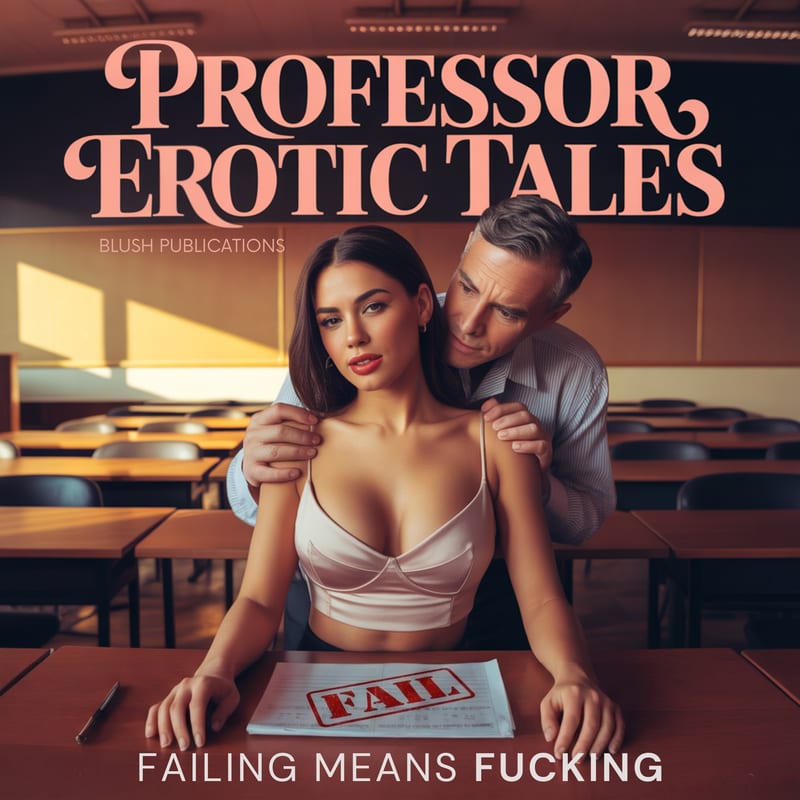
Professor Erotic Tales
Forbidden academic encounters, office-hours tension, and intellectual seduction in 10 explicit professor erotica stories.