Erotica for New vs Long-Term Couples

Two couples ask for the same recommendation and one of them has a good evening. The variable is rarely taste. It is how long they have been together, and what shared listening is being asked to do.
A couple three months in and a couple eleven years in are using erotica for opposite purposes. The first is gathering information about each other. The second already has the information and is looking for novelty. Recommend the same title to both and one of them gets it wrong.
The matrix
| Stage | What tends to land | What tends to misfire | Why |
|---|---|---|---|
| New / early | Low-stakes, single-encounter stories; strangers and first-time premises | Anything involving a third party, jealousy, or a long-shared history | You have no calibration yet; a strong premise reads as a proposal rather than a story |
| Established | Contained scenarios; workplace and authority dynamics; short collections you can dip into | Slow-burn relationship arcs that duplicate the one you are living | You already have the emotional plot; you are shopping for scenario |
| Long-term | High-novelty premises — paranormal, forbidden, power dynamics; variety over depth | Gentle, romantic, reassurance-shaped stories | Reassurance is not scarce; novelty is |
| Reconnecting | Warmth-forward stories, reunion and rediscovery premises | Betrayal, cheating, humiliation, anything with a plausible real-world referent | Fiction is porous when things are raw; distance from the sore spot is the whole job |
| Long-distance | Anything vivid enough to carry without physical presence; strong narrators; anticipation-driven premises | Stories that turn on immediate physical proximity | The gap between the story and your situation is what you feel |
The rest of this explains the reasoning, stage by stage. For the practical side — devices, sync, volume, agreeing when to stop — that is a separate job, handled in the shared listening checklist.
New and early
The problem at this stage is that you have no map of each other yet, and a chosen story reads as a disclosure.
Suggest a story about a particular dynamic in month three and your partner will take it as information about what you want. Sometimes it is. Often it is just curiosity about a premise. But you have not been together long enough for them to know the difference, and there is no established pattern to interpret it against.
So the practical rule is: choose for low interpretive stakes. Stories about strangers, about single encounters, about people meeting for the first time — these carry the least freight, because nobody is going to read a stranger scenario as a statement about the two of you. First Time Erotic Tales, read by Raquel Pierce, sits here for structural reasons rather than thematic ones: the premise is inherently self-contained.
What misfires: anything involving a third party. Sharing, jealousy, an ex, an affair. These are perfectly good tropes and they are the wrong tropes for month three, not because they are risky but because there is no shared history to absorb them. The same story at year eight is unremarkable.
Established
Roughly one to five years. Living together, or close to it. The relationship has a shape and both of you know it.
What changes is that the emotional plot is no longer interesting to you as fiction, because you are already inside a functioning version of it. Slow-burn stories about two people gradually realising they suit each other read as flat here. You did that. You know how it ends.
What works instead is contained scenario — a specific situation with specific constraints and no relationship arc attached. Workplace and authority dynamics do well at this stage for exactly that reason: the boss and professor collections supply a power differential and a setting without asking you to care whether the couple ends up together.
Short collections suit this stage particularly well, because the two of you can dip in without committing an evening and without either of you having to be the one who chose the whole thing.
Long-term
A decade in, give or take. Different problem entirely.
Novelty is the scarce resource. Not intimacy, not reassurance, not emotional depth — you have those, they are the reason you are still here. What you do not have is anything unfamiliar, and erotica at this stage earns its place by supplying it.
This is the stage where the paranormal and high-concept material actually makes sense. Werewolf, demon, and fae collections are not popular with long-term couples because those couples are unusually odd; they are popular because a premise that could not possibly happen carries no relational implication whatsoever. It is maximum novelty at zero interpretive cost. That is a genuinely useful combination.
Forbidden and power-dynamic material works for a similar reason, with a caveat. Irresistible Erotic Tales, narrated by Autumn Moon, is a reasonable entry point for couples who want intensity without a supernatural frame.
What misfires here: gentle, romantic, reassurance-shaped stories. They are not offensive, they are simply redundant. A long-term couple listening to a tender story about two people who are good to each other is listening to a documentary.
Reconnecting after a rough patch
The most easily got-wrong stage, and the one where a general recommendation is most likely to do harm.
Fiction is porous when things are raw. A story that would be pure entertainment on a normal evening becomes a referendum when there is an unresolved argument sitting underneath. That is not oversensitivity; it is how attention works when something is already sore.
So the rule inverts. Instead of choosing for novelty, choose for distance from the sore spot. Reunion premises, rediscovery, established couples with warmth in the framing — Passionate Erotic Tales is the obvious shape here, because the emotional register is warm rather than transgressive.
Actively avoid: cheating, betrayal, humiliation, and — importantly — hotwife and sharing material, however much either of you enjoyed it before. Those tropes depend on a secure baseline to be enjoyable. Without one they stop being fiction and start being a live question. Come back to them later; they will still be there.
One more thing worth saying plainly: if erotica is being deployed as a repair mechanism, it is the wrong tool. It works well as something two people who are fine do together. It works badly as a conversation neither of you wants to have directly.
Long-distance
The constraint is not emotional, it is sensory. There is no physical presence to build on, so the audio has to do all of it.
That raises the weight of narration enormously. At close range, an average performance is carried by the situation; at distance, the voice is the situation. Sample harder than you otherwise would, and prioritise a narrator you both find genuinely good over a trope you both find mildly interesting.
Premise matters too. Stories built on anticipation, waiting, and buildup map onto the actual circumstance and are more effective than stories that turn on immediate physical contact — the latter tend to underline the gap rather than bridge it. Longing is doing real work here in a way it is not for a couple on the same sofa.
Practically: agree a title in advance, both download it, and treat the listening as a scheduled thing rather than a spontaneous one. Spontaneity is not available across time zones, and pretending otherwise mostly produces failed attempts.
How to use this
Stage narrows the field. It does not choose the book.
Within any stage, the ordinary rules still apply — sample the narrator, agree the premise before you press play, and prefer collections over novels for a first attempt, since ten separate stories give you nine more chances if the first one misses. The general couples guide covers that selection process in more detail.
Every title in the audiobook catalogue carries a free sample. Between two candidates from the right band, the one with the voice you both like is always the correct answer.
Books Mentioned
Passionate Erotic Tales
Unrestrained passion, explosive chemistry, and intense encounters in 10 explicit passionate erotica short stories.

Hotwife Erotic Tales
Adventurous couples, shared encounters, and boundary-pushing desire in 10 explicit hotwife erotica stories.
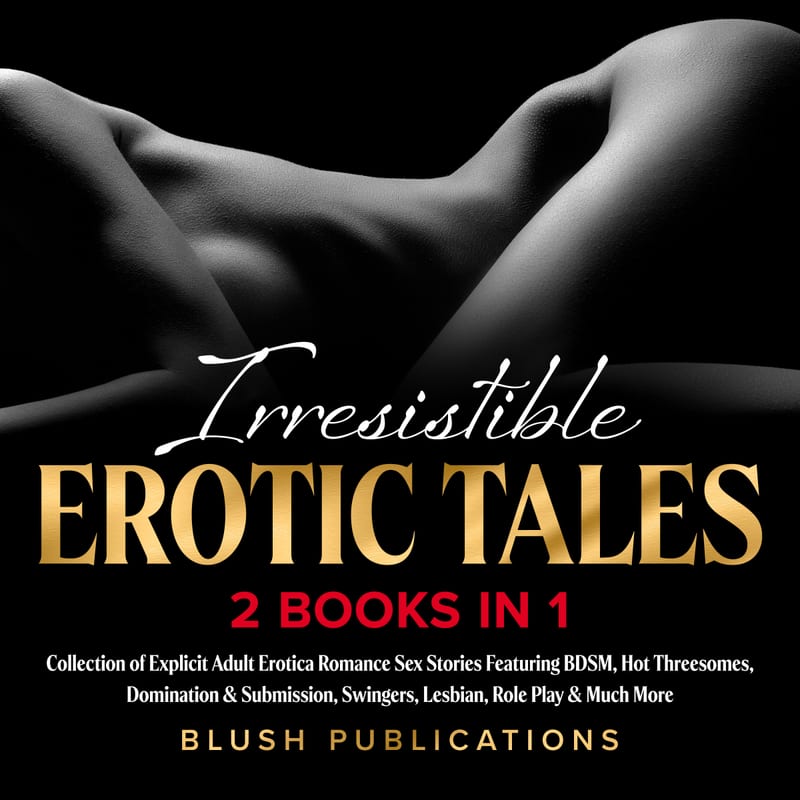
Irresistible Erotic Tales
Magnetic attraction, instant chemistry, and encounters you cannot resist in 10 explicit passionate erotica stories.