Is Listening to Erotica Cheating? An Honest Look

The short answer is no. Cheating requires another person, and a narrator reading a work of fiction is not a person you are involved with. Nobody is being deceived by a paperback and nobody is being betrayed by an audio file.
The longer answer is that almost nobody asking this question actually wants a definitional ruling. They want to know whether their partner is going to be hurt, or whether their own hurt is reasonable. Those are much better questions, and they do not have a one-word answer.
The question underneath the question
When someone types this into a search bar, they are usually one of three people.
The first is listening privately and feels a low hum of guilt they cannot account for. Nothing has happened. Nobody has objected. The guilt arrived anyway, probably imported from somewhere much older than this relationship.
The second has found out their partner listens and is trying to work out how upset to be. The internet is giving them two answers, both loud — that it is completely harmless and they are being controlling, or that it is a form of infidelity and they have every right to an apology — and neither is landing.
The third is in a relationship where something genuinely is wrong. The erotica is not the problem; it is the thing that became visible first.
These three people need completely different things, and the reason the internet’s answer feels unsatisfying is that it is written for whichever one you are not.
Why erotica lands differently than pornography for some partners
A pattern worth naming, because it surprises people: partners who are relaxed about visual pornography are sometimes far less relaxed about erotic fiction, and the reason is not prudishness.
Visual pornography is easy to categorise as mechanical. Whatever else it is, it is obviously not a relationship. Erotic fiction — especially narrated, especially in a voice, especially over hours — involves attention, anticipation, characters with names, and something that resembles emotional investment. It looks less like a physical release and more like a connection, and connection is the thing a monogamous agreement is usually built around.
That is not a rational distinction in any strict sense. Fictional characters cannot reciprocate. But the feeling is real and it is common, and dismissing it as illogical is a reliable way to make a conversation worse. If your partner’s discomfort is specifically about intimacy rather than specifically about sex, telling them the plot is fictional will not touch the thing that is bothering them.
The mirror image also exists. Plenty of people are relieved to learn their partner listens to erotica rather than watching porn, because fiction feels less comparative — nobody in an audiobook has a body their partner is measuring them against.
Where couples actually draw lines
In practice, couples who have thought about this tend to land on one of a handful of positions. None of them is the correct one; they are just the common ones.
Solo entertainment, no discussion needed. Erotica sits in the same category as any other private media. Nobody reports on their reading habits and nobody expects to.
Fine, but not secret. The content itself is unremarkable; the concealment would not be. This is the most common position, and it is usually less about surveillance than about a general dislike of hidden compartments.
Fine, and shared. Some couples listen together and treat it as a shared activity rather than a private one. If that appeals, we have a whole guide on erotica for couples.
Fine, with content limits. The line is drawn around specific themes rather than the medium. Someone might be entirely comfortable with paranormal or workplace stories and genuinely not comfortable with, say, cheating-themed erotica, because the scenario touches something real for them. This is a coherent position and worth taking seriously rather than arguing out of.
Not fine at all. Rarer, and usually attached to a broader belief system rather than to this specific behaviour. Hard to negotiate directly, because the disagreement is not really about audiobooks.
The useful move is to find out which of these your partner holds, rather than assuming they hold the one you would find most convenient.
Three cases that genuinely are different
Being fair to the people who feel uneasy: there are situations where the discomfort is pointing at something real.
When it is replacing rather than supplementing. If someone has stopped initiating with their partner and is consistently choosing solo listening instead, the erotica is not the cause but it is a symptom worth reading. The conversation to have is about the relationship’s sex life, not about deleting an app.
When there is a specific agreement being broken. Some couples have explicitly agreed to abstain from solo sexual media, often after a difficult period. Breaking a negotiated agreement is a real breach, and the fact that the content was fictional does not undo it. The problem is the broken agreement, not the genre.
When the concealment is disproportionate. Keeping your listening private is normal. Building an elaborate infrastructure of hidden accounts and cleared histories around something you insist is harmless suggests you do not entirely believe yourself. Worth sitting with. Wanting privacy is not the same as needing to hide.
Notice that in all three, the erotica is incidental. This is generally true. Fiction is very rarely the actual issue in a relationship, and it is very often the place the actual issue surfaces.
How to have the conversation
If you are the one who listens and you want to stop feeling furtive, the timing matters more than the wording. Do not raise it in bed, during a fight, or immediately after being caught. Raise it on a walk or a drive, when nobody is looking at anyone.
Something like: “I listen to erotic audiobooks sometimes. It’s not a secret, I just never mentioned it. Does that bother you?”
Then stop talking. The most common failure here is pre-emptive defence — piling on justifications before you know whether one is needed. Very often the answer is a shrug and the conversation is over in nine seconds.
If you are the one who found out, resist the opening line you have already drafted. “How long has this been going on” frames it as an affair before you have established that it is one. Try instead: “I saw this and I had a reaction I wasn’t expecting. Can we talk about it?” That is honest, it does not accuse, and it leaves you room to discover that your own reaction was smaller than it felt in the first hour.
And if you are the one who found out and you are genuinely hurt: say the feeling, not the verdict. “I felt hurt” cannot be argued with. “This is cheating” can, and will be, and then you will spend the evening litigating a definition instead of talking about the feeling.
If you are the one who feels guilty for no reason
Guilt with no injured party is worth examining rather than obeying. Ask what rule you think you broke, and where the rule came from. Most of the time the answer is a religious upbringing, an early experience of being caught at something, or a general sense that wanting things is greedy. None of those are your partner’s position and none of them are your own considered view.
It is also worth noticing that this guilt is very unevenly distributed. Men who listen to erotica tend to report feeling silly; women tend to report feeling ashamed. That asymmetry did not come from anything either of them did.
The bottom line
Listening to erotica is not cheating. It is fiction, consumed alone, involving nobody.
But “not cheating” is a low bar and it is not the bar most people actually care about. The question worth answering is whether your relationship has an agreement about solo sexual media, whether both of you know what it is, and whether either of you is quietly unhappy. If the answer to all three is yes, no, and no — you are fine, and you can stop searching.
If you have never actually asked, the search result you needed was not this page. It was the conversation.
Books Mentioned
Hotwife Erotic Tales
Adventurous couples, shared encounters, and boundary-pushing desire in 10 explicit hotwife erotica stories.
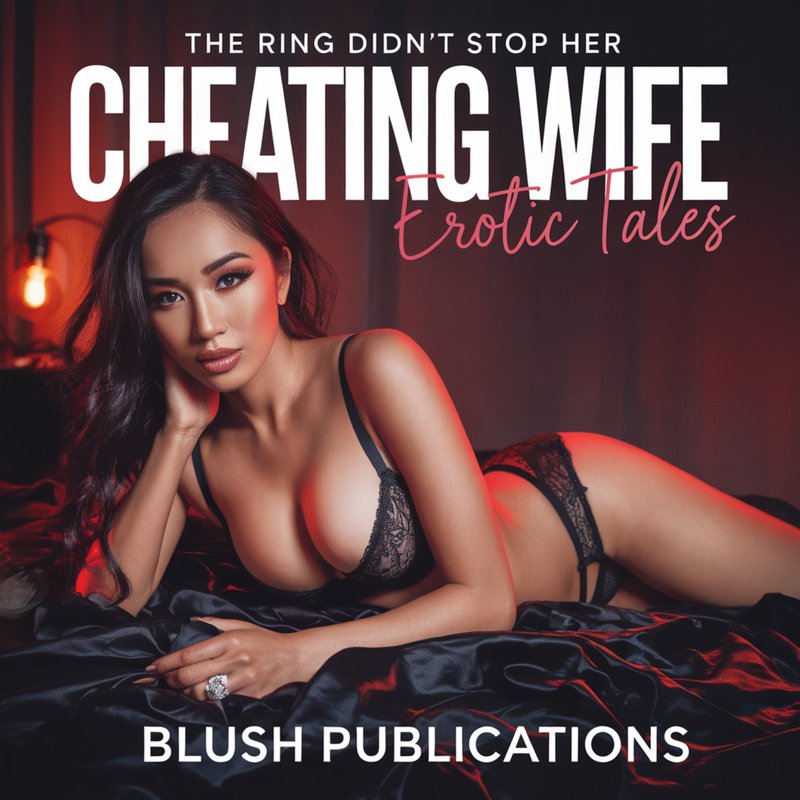
Cheating Wife Erotic Tales
Secret affairs, revenge hookups, and forbidden betrayal in 10 explicit cheating wife erotica short stories.

First Time Erotic Tales
Virgin seduction, first-time encounters, and the thrill of inexperience in 10 explicit erotica short stories.