Homewrecker Erotica: Reading the Other Woman
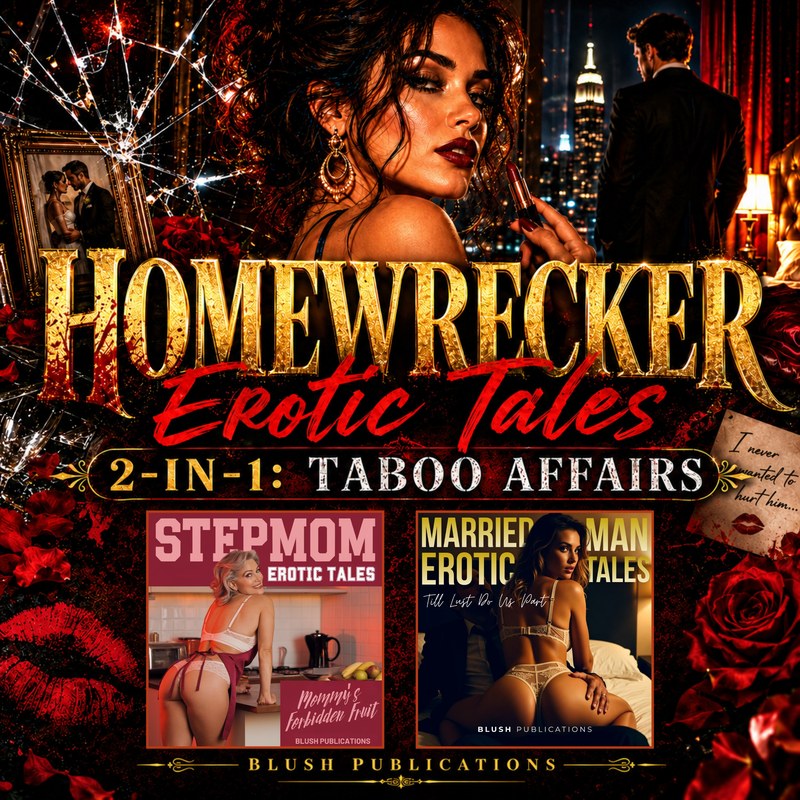
In most fiction, the other woman is a device. She exists to be discovered, to threaten a marriage, and to be defeated. Homewrecker erotica does the one thing that changes everything: it gives her the point of view.
That single move is the whole shelf, and it produces a reading experience that is genuinely unlike its neighbours.
What the point of view changes
The wife becomes abstract. In a cheating wife story, the marriage is present in every scene because the protagonist lives inside it. Here the marriage is a fact reported at second hand — a phone that lights up, a ring, a reason he has to leave by ten. The reader experiences it the way the protagonist does: as an off-stage constraint rather than a relationship.
Guilt becomes optional. The protagonist did not make a promise. She is not breaking a vow, because she never took one. This is the most important structural difference in the subgenre and the thing that most divides readers — some find it liberating, others find the absence of guilt removes the stakes entirely.
Waiting becomes the main activity. The other woman’s life is organised around someone else’s schedule. Huge amounts of homewrecker fiction are about time: the gap between messages, the hours she is available and he is not, the holidays that belong to somebody else.
The three endings
The shelf resolves in one of three ways, and knowing which you want will save you money.
She wins. He leaves. This is the romance-adjacent ending and the most common in full-length work, because it lets the book finish as a love story.
She walks. She decides the arrangement is not enough and ends it herself. The most emotionally satisfying ending for many readers and the one that treats her as a full character rather than a competitor.
It continues. No resolution. The arrangement simply persists, which is the ending most short-form collections use because it preserves the fantasy without committing to consequences.
Reading it off the blurb: if the copy uses the language of choice — she wanted, she decided — expect one of the first two. If it stays entirely in the present tense and describes a situation rather than an arc, expect the third.
How it differs from its neighbours
Against cheating wife stories: different protagonist, different guilt structure, different relationship to the marriage. Same events seen from a different chair.
Against married man stories: these often share a plot but the married man shelf frequently uses his point of view, which shifts the story toward his conflict rather than her position.
Against hotwife stories: almost opposite. Hotwife fiction is built on the husband’s knowledge and consent; homewrecker fiction is built on his absence from the arrangement entirely.
The honesty question
The subgenre has one recurring criticism worth taking seriously: that it is only satisfying if the wife stays flat. Give the wife interiority and the fantasy becomes uncomfortable; leave her flat and the writing is doing something cheap.
The books that solve this generally do it by making the arrangement the antagonist rather than the wife — the protagonist is not competing with a woman, she is trapped in a structure. That reframing keeps the ethical weight without requiring anyone to be a villain, and it is a reliable marker of a well-written entry in the shelf.
In audio
The technical demand is specific: the narrator has to carry long stretches of solitude without the performance flagging. A great deal of this material is one woman alone, waiting, thinking. There is no dialogue to lean on.
What works is a narrator who varies pace rather than volume across those passages — speeding slightly through routine, slowing hard on the moments that matter. A flat read makes the waiting sections feel exactly as long as they are.
Where to listen
Homewrecker Erotic Tales, narrated by Poppy Baker, is the collection. Married Man Erotic Tales shares a narrator and runs the adjacent point of view; Cheating Wife Erotic Tales covers the inside-the-marriage version.
Shelves: homewrecker, married man, cheating wife, taboo. See also what is affair erotica.
Frequently Asked Questions
Is homewrecker erotica the same as cheating erotica?
No. Cheating erotica is usually told by the person breaking a promise; homewrecker erotica is told by the person who never made one. The events overlap, the moral position does not.
Does the wife usually appear?
Rarely as a character, often as a presence. The most-praised books in the shelf give her at least one real scene, because a completely absent wife makes the whole thing weightless.
Which ending is most common in short collections?
The unresolved one. Short form preserves the arrangement rather than resolving it, because resolution needs length to earn.
Is there a male equivalent?
Yes, though it is much less written and usually filed under affair or married man rather than under its own label.
Why is it a separate shelf from affair erotica?
Because affair erotica is defined by the act and homewrecker erotica by the vantage point. A story can be an affair story told from four different chairs; this shelf is one specific chair.
Books Mentioned
Homewrecker Erotic Tales
The other woman, the affair, the ring that didn't stop anyone. 20 explicit homewrecker stories.

Married Man Erotic Tales
Cheating husbands, secret affairs, and forbidden encounters in 10 explicit married man erotica short stories.
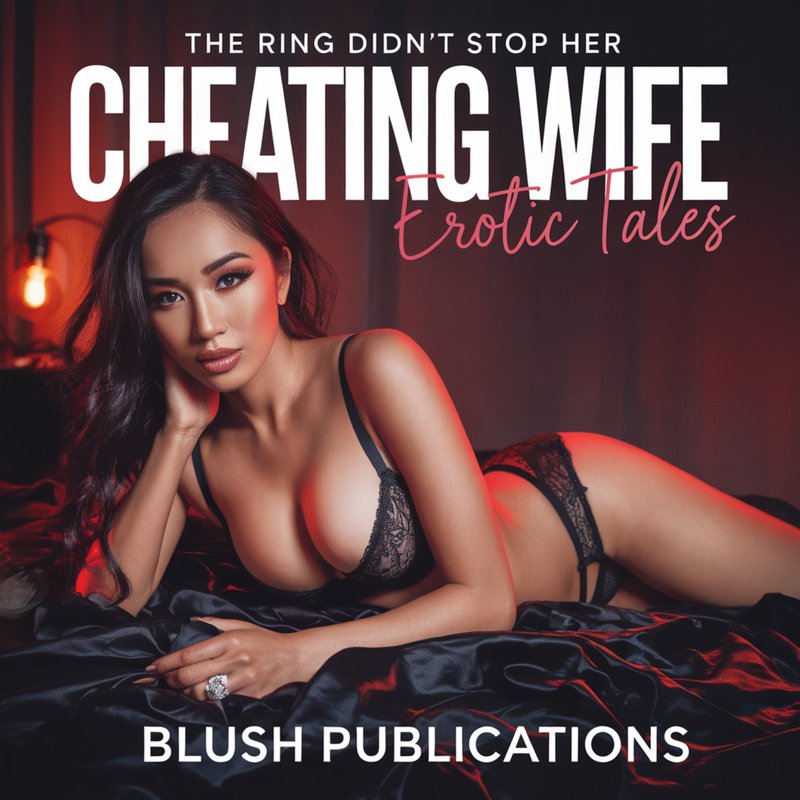
Cheating Wife Erotic Tales
Secret affairs, revenge hookups, and forbidden betrayal in 10 explicit cheating wife erotica short stories.