What Is MC Erotica? The Motorcycle Club, Rank by Rank
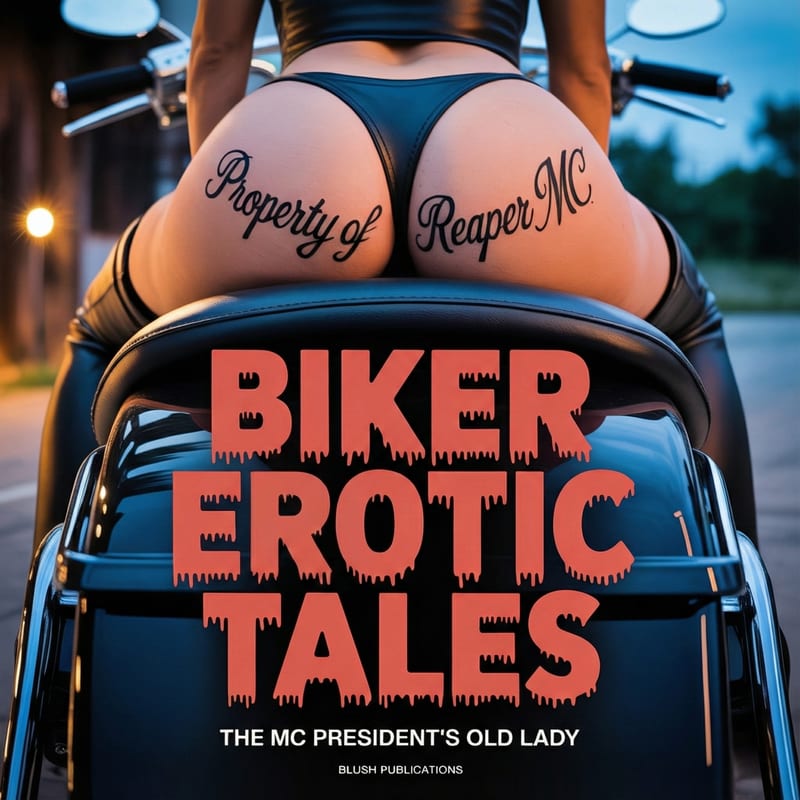
MC stands for motorcycle club, and MC erotica is fiction set inside one. That much is obvious from the name. What is not obvious — and what separates readers who love the subgenre from readers who bounce off it in chapter two — is that the club is not a backdrop. It is a rank structure, and the rank structure is what generates the plot.
Get the hierarchy straight and the whole subgenre becomes legible. This page is that reference.
The ranks, and what each one does to a story
Fictional clubs borrow their vocabulary from real one-percenter culture, filtered through decades of television and paperbacks. The titles below are near-universal across the genre.
President
Holds final authority. Votes are taken, but the President sets what gets voted on.
In a plot: the President is the immovable object. If he is the love interest, the story is about whether anything can outrank the club in his priorities — and the answer has to cost him something. If he is not the love interest, he is the obstacle, because he can veto the relationship and everyone knows it. A President who bends easily breaks the whole setting.
Vice President
Second chair. Runs the club when the President cannot, and is the usual site of succession tension.
In a plot: the VP is the genre’s most reliable romantic lead. He has authority without finality, which means he can act on feeling and still face consequences. Writers reach for him constantly, and for good structural reasons.
Sergeant-at-Arms
Enforcement and internal discipline. The one who handles what the club decides to handle.
In a plot: the darkest available hero, and the one who needs the most careful handling. His job is violence, so a story that makes him a love interest has to reckon with that rather than decorate it. Done well, he is the subgenre’s strongest character; done lazily, he is a menace with a motorcycle.
Road Captain
Plans routes, runs the pack on the move, responsible for the club’s safety in transit.
In a plot: underused, and the most interesting minor rank. He is competent rather than dominant, which makes him the natural fit for a quieter romance thread running alongside the main one.
Treasurer and Secretary
The paperwork. Money in, money out, minutes of church (the club’s closed meetings).
In a plot: these ranks exist mainly to create evidence. If a story has a legal-jeopardy subplot, it usually runs through here.
Patched member
A full voting member. Wears the club’s colours — the three-piece patch — and has earned the right to.
In a plot: the chorus. Patched members supply the pressure of collective opinion, which is what makes club life feel claustrophobic in the way the genre needs.
Prospect
A probationary member. Does the unglamorous work, has no vote, can be refused a patch at any point.
In a plot: the prospect is precarity personified. A prospect love interest cannot protect anyone, and that powerlessness is the whole engine of his arc. It is the one rank where the man is the vulnerable party, which is why writers who want to invert the genre’s usual dynamics start here.
Old lady
The committed partner of a patched member. Not a rank in the club, but a recognised status with real protection attached.
In a plot: becoming an old lady is the genre’s central promotion, and most MC romances are structurally about earning, refusing, or surviving it. The term sounds dismissive and functions as the opposite — it means claimed, protected, and off-limits to every other member.
Club girl
A woman around the clubhouse without a claim on any one member.
In a plot: usually the contrast that defines what being an old lady means. Handled badly this is where MC fiction gets ugliest; handled well, it is where a writer shows what the club actually costs the women inside it.
The club as a plot engine
Once the ranks are in place, three engines run almost automatically.
The vote. Clubs decide things collectively, in church, behind a closed door. That means any private relationship can become a public agenda item. A romance that would be nobody’s business in another setting is here subject to ratification — and the reader knows, from the first chapter, that a vote is coming.
The patch. Membership is granted and can be stripped. Everything a character has — income, protection, family, identity — is attached to a piece of leather that other men can take back. That is enormous leverage, and it is why MC stories can generate real stakes without needing an external villain.
The road. The club moves. Runs, rides, and territory disputes give a writer a reason to strand two characters together somewhere unfamiliar, which is the forced proximity trope arriving through the front door with a legitimate excuse.
Where MC differs from biker generally
Not all biker fiction is MC fiction, and the distinction matters when you are searching.
A lone-rider story uses the aesthetic — the bike, the leather, the drifter energy — without the institution. It is a freedom fantasy. An MC story uses the institution, and the institution is a set of constraints. It is a belonging fantasy, and belonging costs.
If what appeals to you is one man and an open road, a general biker collection will serve you better than a clubhouse saga. If what appeals is the hierarchy, the loyalty tests, and the sense of a closed world with its own laws, you want MC specifically.
The overlap with mafia fiction is real and worth knowing: both run on a rank structure, both make loyalty the highest virtue, both put a woman inside an organisation that did not ask for her. The difference is texture. Mafia is money, tailoring, and generational obligation. MC is proximity, noise, and a family you rode into rather than were born into.
What to expect on the page
The register is rougher than most of the erotica shelf. Dialogue is blunt, the men are territorial, and the possessiveness is presented as devotion rather than examined as a problem. That is the genre contract, and readers who want it examined should be reading something else.
Heat level runs high and arrives early. MC stories rarely slow-burn, because the setting does not support extended ambiguity — men in this world state what they want.
Consent is worth watching for. Good MC fiction distinguishes hard between a possessive hero and a coercive one, and the tell is whether the woman’s refusals are heard when she makes them. Weak MC fiction blurs that line and calls the blur intensity.
Where to listen
Biker Erotic Tales is the catalog’s entry into the setting — ten stories narrated by Zabrina Marie, whose lower register suits the material better than a brighter voice would. The biker category has the rest, and Alpha Erotic Tales covers the same dominance dynamics without the club structure if the hierarchy turns out not to be the part you wanted.
For a ranked run-through of the subgenre rather than a reference, the biker roundup does that job.
Frequently Asked Questions
Is MC erotica the same as biker romance?
Not quite. Biker romance is the wider category and includes lone riders, mechanics, and men who simply own motorcycles. MC specifically means a club with a hierarchy, a clubhouse, and a patch. If the story does not have church scenes and a vote, it is biker rather than MC.
What does “old lady” actually mean?
It is the recognised status of a member’s committed partner. It carries genuine standing inside the club — protection, respect, and a claim no other member may challenge. The phrase reads as an insult to outsiders and functions as the opposite within the world.
What is a prospect?
A probationary member who has not yet been given the club’s colours. Prospects do the menial work, cannot vote, and can be denied a patch. In fiction they are the one rank where the man holds no power, which makes them useful for stories that want to invert the usual dynamic.
How explicit is MC erotica compared with other tropes?
Generally at the high end, and it escalates quickly. The setting rewards directness, so the slow-burn structures common in office or first-time material rarely appear here.
Do I need to know real motorcycle-club culture to follow it?
No. The genre is self-explaining and heavily stylised — closer to its own conventions than to any real organisation. The ranks above are all the vocabulary you need.
Books Mentioned
Biker Erotic Tales
Outlaw bikers, clubhouse encounters, and savage possession in 10 explicit biker MC erotica short stories.
Mafia Erotic Tales
Possessive crime lords, dangerous obsession, and dark desire in 10 explicit mafia erotica short stories.

Alpha Erotic Tales
Triple heat. 30 explicit stories of dominant alpha males who take command and never ask twice.