X-Rated, Explicit or Steamy? The Heat Labels Decoded
There is no standards body for this. No board sits down and rates books, no certification exists, and the word on the cover was chosen by whoever wanted to sell it. That is the single most important fact about heat labels and it explains everything that follows.
Still, the words do mean roughly consistent things, because writers and readers have converged on a rough scale through use. Here is the ladder, rung by rung.
The ladder
| Rung | Label | What happens on the page | What language is used |
|---|---|---|---|
| 1 | Closed door / sweet | The scene ends at the bedroom door and resumes afterwards | None — the act is not described |
| 2 | Steamy | Scenes occur and are described, but obliquely. Sensation over anatomy | Euphemism, metaphor, “he filled her” |
| 3 | Spicy | Scenes are described directly and take up real page count | Mixed — direct but still somewhat softened |
| 4 | Explicit | Nothing is elided. Anatomically direct throughout | Plain, blunt, no euphemism |
| 5 | Erotica | Explicit, and the sexual content is the point rather than a component | Plain, plus extended focus |
| 6 | X-rated / hardcore | Explicit, sustained, and often with little narrative around it | Plain, and the pacing assumes you are not here for plot |
Two things fall out of that table that are worth stating outright.
Rungs 1 to 4 describe how much is shown. Rungs 5 and 6 describe what the book is for. That is a category shift, not a continuation of the same scale, and it is where most confusion originates. A romance can be fully explicit and still be a romance — the explicitness is a property of the prose, not of the book’s purpose. Erotica is a different proposition.
“Spicy” is the least stable term on the ladder. It arrived through social media rather than publishing and it moves constantly, generally downward — books called spicy today would have been called steamy five years ago. Treat it as the vaguest of the six.
What the pepper scale actually means
The emoji scale — one to five peppers — is a reader convention, not a publisher one. It emerged from book social media and it maps roughly to rungs 2 through 5 above, with five peppers landing at explicit rather than at anything beyond it.
The practical problem is that it has no ceiling. Once five peppers came to mean “explicit romance”, genuinely hardcore material had nowhere to sit, which is why you now see people writing six and seven peppers as a joke that has stopped being one. If you rely on the pepper scale, know that its top rung is not the top of the actual range.
What the retailer label guarantees
Very little, and this is worth being precise about because the wording is technically accurate while being practically useless.
An adult or explicit flag on a retailer means the publisher declared the title as adult content. It guarantees the book contains material the publisher thought needed flagging. It does not tell you the rung — a rung 3 book and a rung 6 book carry an identical flag.
A category placement — Erotica, Romance/Erotica, Fiction/Erotica — is selected by the publisher from a list. Publishers choose these to optimise discoverability, not accuracy, and the incentive runs in both directions. Some place explicit books in romance to reach a larger audience; others place mild books in erotica to reach a more motivated one.
The absence of a flag guarantees nothing either. Plenty of explicit material sits unflagged, particularly in self-published romance.
What no label anywhere tells you: whether the explicit content is frequent or occasional, whether it is spread through the book or concentrated, and whether the language is blunt or literary. Those three variables matter more to most readers than the rung does, and no tagging system captures any of them.
How to verify heat yourself in about two minutes
Four checks, in order of reliability.
Read the reviews for complaints. This is by far the most reliable method available. Readers who were surprised say so, loudly and specifically, and a one-star review reading “far more graphic than I expected” tells you more than any label. Search reviews for the words “graphic”, “explicit”, “steamy”, and “too much” — the mismatch reviews are the signal.
Use the sample and skip forward. Almost every retailer offers a preview, and almost nobody uses it correctly. Do not read from the beginning; openings are the least representative pages in any book. Jump to roughly a third in, where a first scene usually sits, and read half a page. On audio, the free sample is typically pulled from the opening, so this works better on the ebook preview even if you intend to listen.
Read the blurb for what it does not say. Blurbs signal heat by omission and by code. “Sizzling chemistry” is rung 2. “Steamy scenes” is rung 3. “Explicit content, intended for adults” is rung 4 or above. A blurb that mentions no heat at all is usually rung 1, because publishers advertise heat when they have it.
Check the page count against the plot. A rung 5 or 6 book has less plot per page than a romance of the same length, and short collections are more likely to sit high on the ladder than long novels, because there is no room for anything else.
Why the labels stay unreliable
Not carelessness — incentives, running three ways at once.
Publishers want the widest audience the content permits, which pushes labels downward. Authors want to warn readers to avoid bad reviews, which pushes them upward. Retailers want adult material findable enough to sell and quiet enough not to attract attention, which pushes everything sideways into vagueness.
Add to that a genuine drift in the words themselves. What “steamy” denoted in 2015 is not what it denotes now, because the market’s baseline has moved. A ladder built on words has to be recalibrated constantly and nobody is doing the calibrating.
The upshot: use the labels to narrow the field, never to make the decision. The reviews are the decision.
Where the catalog sits
For the record, since the whole point of this page is that publishers should say plainly where they sit: Blush collections are rung 4 to 5 — explicit throughout, no fade-to-black, with the sexual content as the purpose rather than as a component of a romance plot.
Filthy Sex Short Stories, narrated by Melissa G, sits at the blunter end of that. Erotic Sex Short Stories and Seductive Erotic Sex Stories are comparable. Passionate Erotic Tales is the warmest register the catalog publishes and still sits at rung 4.
Every book page carries a free audio sample, which is the fastest heat check available. The full catalog has the rest, and the steamiest audiobooks roundup rates a wider set by heat.
Frequently Asked Questions
What is the difference between explicit and erotica?
Explicit describes the prose — nothing is elided, the language is direct. Erotica describes the book’s purpose — the sexual content is the point rather than one element of a story. A romance can be fully explicit without being erotica.
What does X-rated mean for books?
It has no formal meaning in publishing, since no rating board covers books. In use it signals sustained, hardcore content with minimal surrounding narrative — the top of the practical range.
Is five peppers the maximum heat level?
Five peppers is the top of a reader convention that maps to explicit romance, not to the top of what exists. Genuinely hardcore material sits above the scale, which is why people have started writing six and seven.
Does an adult content flag tell me how explicit a book is?
No. It only means the publisher declared the title as adult. A moderately steamy book and a hardcore one carry an identical flag.
What is the fastest way to check heat before buying?
Search the reviews for complaints about being too graphic or not graphic enough. Mismatch reviews are specific and honest in a way no label is.
Books Mentioned
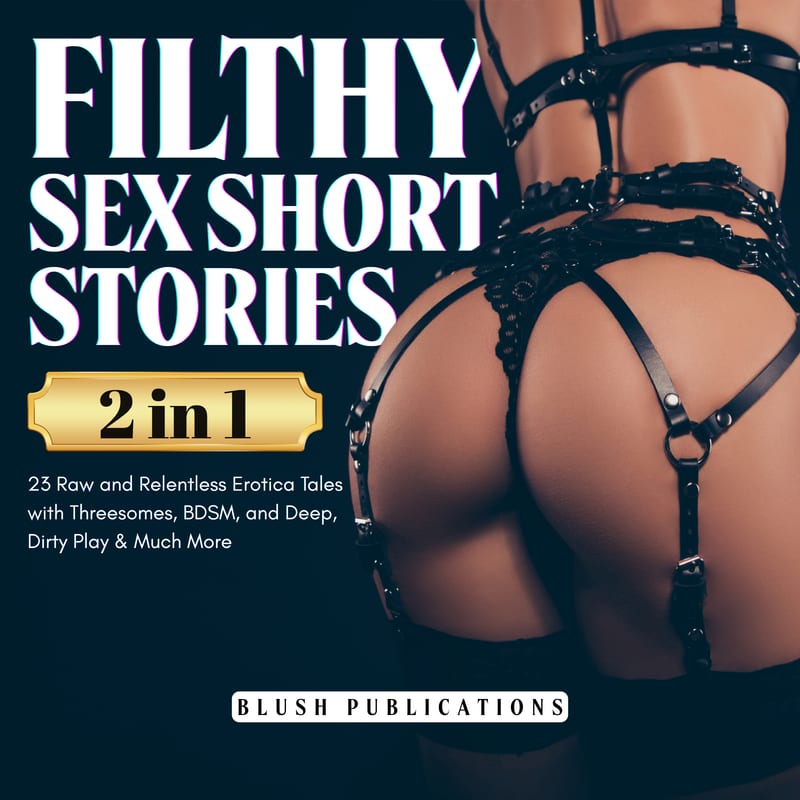
Filthy Sex Short Stories
Boundary-pushing encounters, uninhibited desire, and raw explicit heat in 10 filthy erotica short stories.
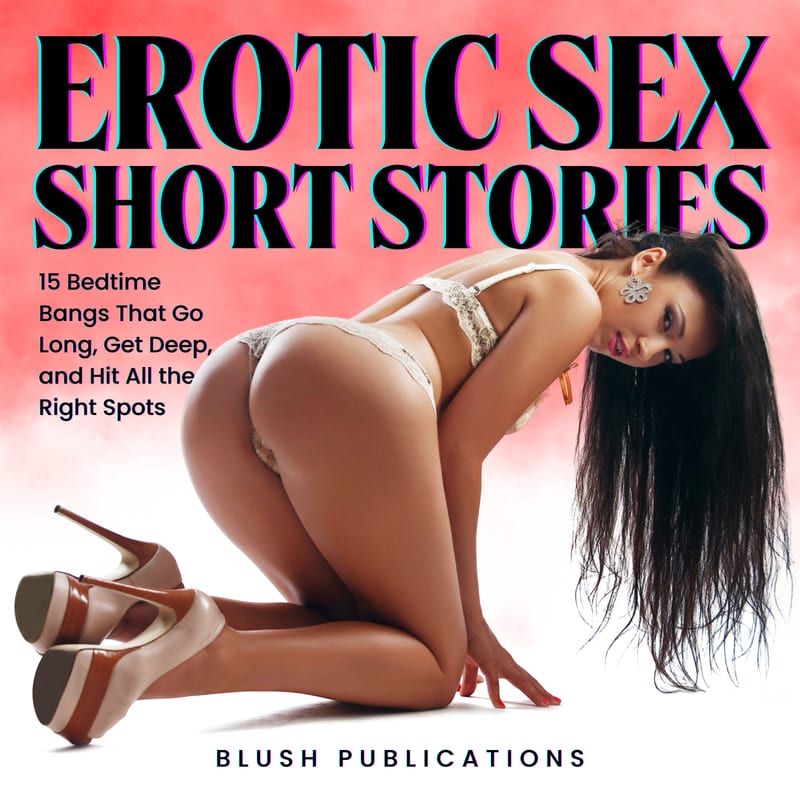
Erotic Sex Short Stories
A diverse collection of 10 explicit erotica short stories spanning multiple themes, kinks, and fantasies.
Hotwife Erotic Tales
Adventurous couples, shared encounters, and boundary-pushing desire in 10 explicit hotwife erotica stories.