What Is Dragon Erotica? The One Problem It Has to Solve
Dragon erotica has exactly one structural problem, and every convention in the subgenre is an answer to it.
A dragon is enormous, reptilian and not built for a human partner. That is not a detail a writer can route around, because the pairing is the premise — remove the dragon and there is no book. So the genre has developed four distinct solutions, and which one a title picks determines almost everything about how it reads, who it satisfies, and whether you will enjoy it.
The problem, stated plainly
The trope promises a partner who is not human, and the appeal depends on that partner staying not human. Which produces two opposite failure modes.
Solve the problem too tidily and the dragon becomes a tall man with a temper and an unusual property portfolio. The mythology turns into wallpaper. Readers who searched for dragons rather than billionaires notice immediately, and say so in reviews.
Refuse to solve it at all and you have written something no mainstream retailer will stock. Audiobook and ebook platforms prohibit bestiality outright, and that rule is not a technicality the genre tiptoes around. It is the reason dragons in this material are always sapient, always able to speak, and always capable of a humanoid form or its magical equivalent. The intelligence is not decoration. It is the condition that makes the subgenre publishable at all.
Everything below is a route between those two failures.
Solution one: he wears a man
The dragon shifts fully into human shape and stays there for the encounter. Physically, the problem evaporates.
How it works. The draconic nature persists everywhere except the body — temperament, territorial instinct, a hoard, centuries of accumulated arrogance, senses that are too sharp, a resting temperature that runs hot enough to be noticeable. The character is a dragon in every respect a reader can be told about, and a man in the one respect the scene requires.
What it costs. The non-human charge, which is the thing the reader came for. A story in this mode has to work continuously to remind you what he is, or the fantasy collapses into ordinary alpha romance with a fire-breathing backstory. Skilled writers keep the shift visible at the edges: pupils that narrow under stress, a grip that has to be deliberately controlled, the near-shift that almost happens and does not.
Who it suits. Listeners arriving from romantasy and paranormal romance, and anyone who wants the mythology, the power dynamic and the possessiveness without explicit non-human anatomy. It is also the most common entry point, because it demands nothing unusual of a new reader.
Solution two: the partial shift
The dragon holds an intermediate form — mostly humanoid, unmistakably not human.
How it works. Horns, a tail, scaled forearms and shoulders, slit pupils, claws, sometimes wings, always a body temperature that gets mentioned. Some writers formalise this as a third state alongside human and full dragon; others treat it as slippage, the shift breaking through when control fails. Either way the physical logistics stay workable while the reminder is permanent and unavoidable.
What it costs. Continuity work, and a lot of it. Every retained feature has to be tracked through every scene, and prose that loses track of where the tail is becomes unintentionally comic. It is also the position most likely to disappoint both flanks: too strange for readers who wanted a man, too tame for readers who wanted a beast.
Who it suits. Most people, most of the time. This is where the bulk of modern dragon erotica sits, because it delivers the largest amount of what the premise promised at the lowest cost to plausibility. If you have no idea which solution you prefer, assume this one and adjust from there.
Solution three: magical accommodation
The world’s magic addresses the difficulty explicitly and on the page.
How it works. A binding, a bargain, a mate bond, a transformation applied to the human partner, an enchantment that alters scale or endurance for a period. The mechanism is named rather than glossed over, and it obeys stated rules. Frequently there is a cost attached — a term of service, a permanent change, something surrendered.
What it costs. Worldbuilding budget, and credibility if handled lazily. Magic that exists solely to resolve an inconvenience reads as homework, and a system that can solve anything drains tension out of everything else in the book. The versions that work make the accommodation itself dramatic: the bargain has terms, the transformation is not reversible, and agreeing to it is a decision with consequences.
Who it suits. Fantasy readers who want internal consistency, and anyone who wants the partner to remain genuinely draconic without the story pretending the difficulty is not there. It also produces the most interesting plots, because a negotiated accommodation is a scene in itself.
Solution four: the difference is the point
The fourth approach does not solve the problem. It puts it in the centre of the frame.
How it works. Scale, power and disparity are the source of the appeal rather than an obstacle to it. The writing keeps attention on the imbalance — on being small, being handled, being overwhelmed by something ancient and enormous. Publishable versions keep the partner humanoid enough to satisfy platform rules, but the register is entirely different from the first three: the story is not managing the difference, it is dwelling on it.
What it costs. Audience width, and endurance. Foregrounding a single sensation works beautifully across fifteen or twenty minutes and gets monotonous across nine hours, which is why this solution dominates short fiction and barely exists at novel length. It also sits closest to the line retailers police, so writers working here tend to be careful and explicit about the humanoid form.
Who it suits. Readers who searched for exactly this and will be frustrated by anything else. Size difference is a search term in its own right, not an accident of the dragon setting, and the people who want it are not looking for a compromise.
Reading a blurb: which solution is being sold
You can usually tell before buying, and it takes about ten seconds.
Language like took human form, shifter, or a job title attached to the dragon points at solution one. Horns, tail, scales, claws and slitted eyes in the description point at solution two. A bargain, a bond, a spell or a named price points at solution three. Anything that leads with size, scale or the word impossibly is solution four, and is telling you so deliberately.
Cover art is a weaker signal but not useless: a human figure with wings behind him is usually one or two, while a beast rendered on the cover suggests three or four. Length helps as well. The shorter the piece, the likelier it commits to the third or fourth route, because short fiction can sustain intensity that a novel would have to dilute.
Where to listen
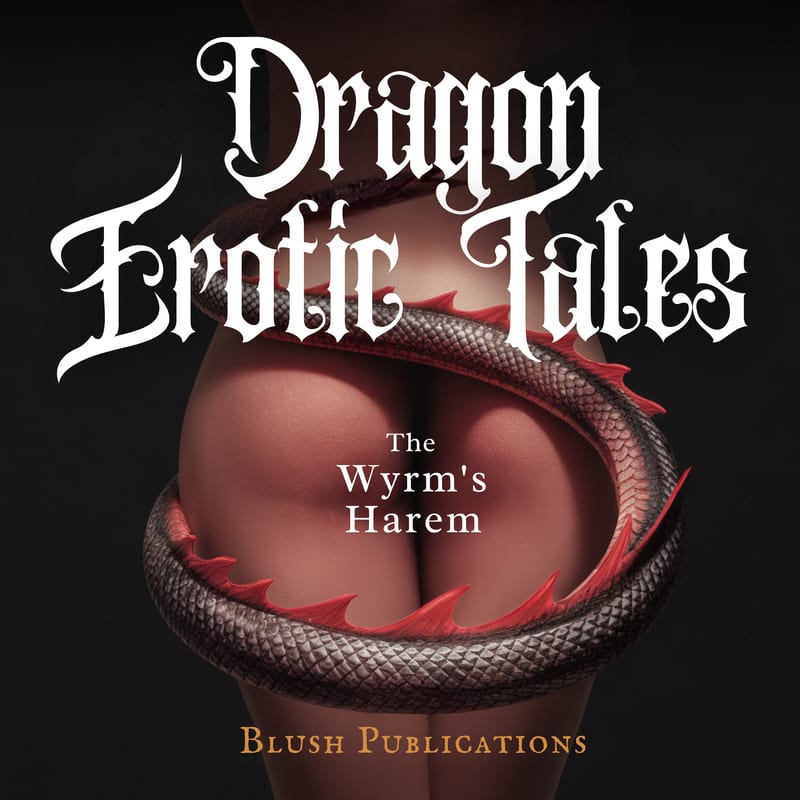
Dragon Erotic Tales works across the middle of that range — ten explicit standalone stories that vary the approach story by story rather than committing to one, narrated by Zabrina Marie. Short-form is genuinely the best way to work out which solution suits you, since you get several answers in a single collection instead of gambling a whole novel on one.
The full dragon catalogue has the rest, and our ranked dragon roundup is the comparison view. If the non-human element rather than the dragon specifically is what appeals, the beast collection covers stranger territory, and shifter erotica shows how dragons sit alongside wolves, cats and bears.
Frequently Asked Questions
Is dragon erotica the same as dragon shifter romance?
They share a mythology and differ in structure. Dragon shifter romance is a relationship arc with explicit scenes inside it and an ending you can rely on. Dragon erotica is organised around the encounters and frequently drops the arc entirely. In practice, romance leans towards solution one and erotica towards two, three and four.
Do the dragons stay in dragon form?
Rarely, and never in a way that removes their intelligence or their ability to consent. Retailers prohibit content involving animals, so the partner in a published dragon story is always a sapient, speaking being in a human or humanoid form. Writers who want the draconic element foregrounded do it through scale, features and magic rather than through actual animal anatomy.
Is this the same thing as monster erotica?
Dragon erotica is one province of it. Monster erotica is the wider category covering demons, beasts, aliens and everything else non-human, and the terminology around it gets used loosely — the difference between monster porn and monster erotica sorts out which word means what.
Which solution should a newcomer try first?
The partial shift, then adjust. It is the genre’s centre of gravity and the fastest way to learn whether you want the dragon pushed further towards human or further away from it.
Books Mentioned
Dragon Erotic Tales
Dragon shifters, fiery encounters, and possessive claiming in 10 explicit dragon erotica short stories.
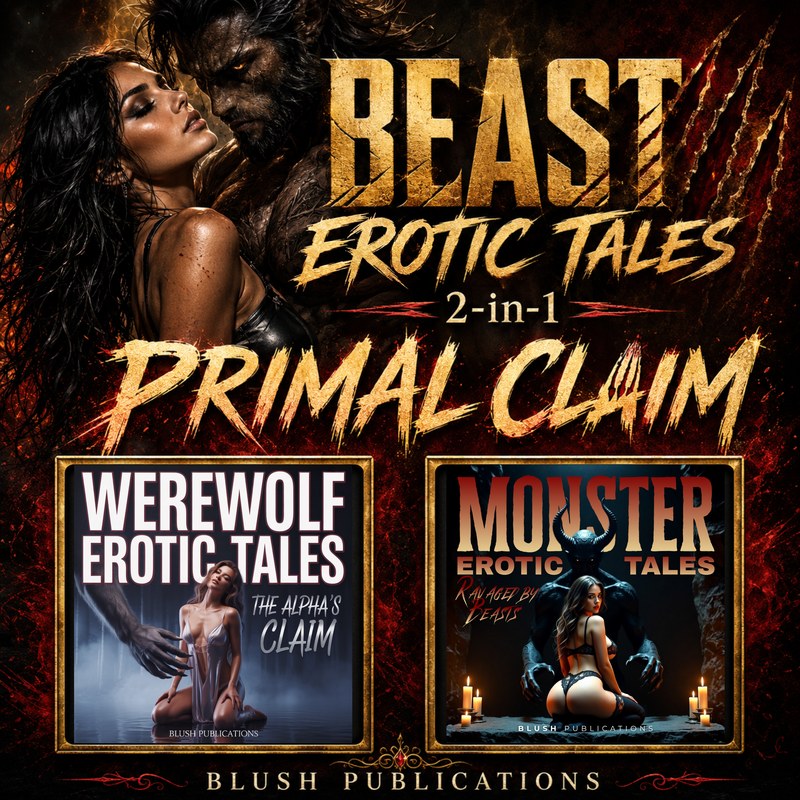
Beast Erotic Tales
Primal claim. 20 explicit stories of monstrous beasts and the humans they take as their own.
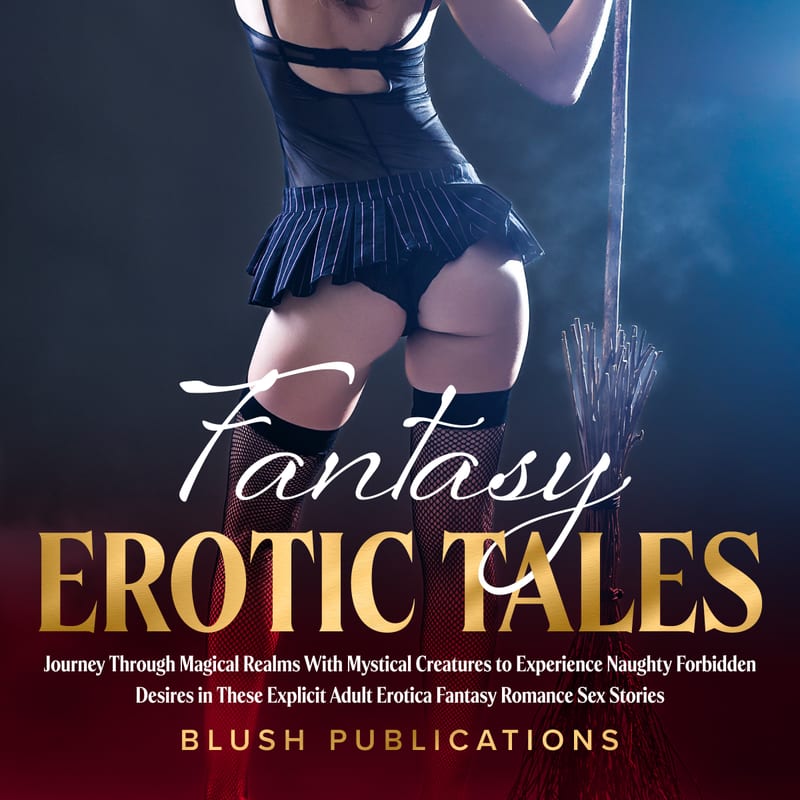
Fantasy Erotic Tales
Mythical creatures, enchanted realms, and supernatural desire in 10 explicit fantasy erotica short stories.