What Is Erotic Horror? The Case for a Disreputable Genre
Erotic horror gets described, almost always, as a hybrid: horror with explicit content in it, or erotica with a monster in the room. That description is wrong, and the wrongness matters, because it makes the genre sound like an act of collage rather than what it is.
The argument of this piece is simple. Fear and arousal are not opposites and never were. They run on substantially the same physiological machinery, the body is worse at telling them apart than we like to admit, and erotic horror is the one genre that treats that confusion as its subject rather than its accident. Everything strange about the form — its intensity, its short length, its unpopularity with the very audiences it belongs to — follows from that single fact.
Fear and arousal share hardware
Both states are sympathetic nervous system events. Heart rate climbs. Breathing shortens. Pupils widen. Adrenaline enters the bloodstream, blood is redirected, the skin becomes more sensitive to touch. If you were handed a readout of someone’s vital signs and told nothing else, you could not reliably say whether the person was frightened or aroused. The signal is nearly the same signal.
What differs is interpretation, and interpretation is a great deal looser than intuition suggests. The best-known demonstration is a study from the early 1970s in which men crossing a high, unstable footbridge were approached by an interviewer, and a comparison group was approached on solid ground. The men who had just crossed the bridge were far more inclined to read their own churning physiology as attraction. They were not confused about the bridge. They were confused about what their bodies meant.
Psychologists later formalised the general case as excitation transfer: activation left over from one stimulus does not vanish when the stimulus does, and it amplifies whatever comes next. Frighten someone, then present something appealing, and the appeal lands harder than it otherwise would.
None of this claims that fear is desire, which would be both false and unpleasant. The claim is narrower and stranger. The body produces a state, the mind attaches a label, and the label is assigned partly by context. A genre that controls the context therefore controls the label — and can hold it deliberately ambiguous for as long as it likes.
That is what erotic horror does. It is not mixing two ingredients. It is refusing to resolve one signal.
Writers knew this long before psychologists did
The gothic tradition is soaked in it. The vampire spent the whole nineteenth century functioning as a mechanism for staging penetration, submission and ruin while calling the result an illness, which is a history the vampire erotica page traces in detail. Machen’s The Great God Pan in 1894 made the terror explicitly sexual and was received as obscene, which tells you the readers of the day understood exactly what they were being shown.
The twentieth century made the fusion deliberate rather than furtive. Angela Carter rewrote fairy tales in 1979 with the sexuality and the violence welded together on purpose, because the tales had always contained both and had spent centuries pretending otherwise. Body horror on film spent the 1970s and 1980s locating dread precisely in flesh, appetite and transformation. And then Clive Barker, in the mid-1980s, wrote the genre’s clearest thesis statement: an order of beings who present themselves as explorers of sensation, for whom pleasure and agony are not two departments but one, administered by the same institution with the same instruments.
Barker is the useful test case because his monsters cannot be sanitised. Remove the erotic charge from the Cenobites and there is nothing left — no creature, no threat, no idea. They are not horror with a sexual dimension. They are an argument about sensation, wearing hooks.
Both parent genres disown it, which is evidence for the thesis
Horror has spent forty years arguing about its own sexual content, mostly defensively. Academic work on the slasher film — Carol Clover’s study of the form is the standard reference — turned the discussion into a permanent debate about whether horror’s erotic charge is a critique of something or a participation in it. The debate never resolved, and the practical consequence is that respectable horror learned to keep the sex implied, so it could not be accused.
Romance disowns it from the opposite direction. Romance, as a genre, makes a contract: the reader is guaranteed an ending in which the couple is intact and safe. Erotic horror cannot sign that contract. The whole point is that the outcome is genuinely in doubt, and a story that promises safety has already discharged the tension it needs.
So the form ends up orphaned, shelved under whichever parent will tolerate it, and marketed with euphemisms. But notice what the orphaning actually demonstrates. Neither parent is rejecting a low-quality hybrid. Each is rejecting the same specific thing — an unresolved signal that horror wants resolved as fear and romance wants resolved as love. The genre is disreputable precisely because it refuses to tell you which one you are feeling, and that refusal is its entire technical achievement.
The obvious objection, and why it does not hold
The objection is that this is a flattering description of something crude. That erotic horror is horror with an explicit scene inserted, and the physiology is a post-hoc justification for material that would otherwise be indefensible.
There is a clean test. Take the scene out and see what happens to the story. In horror that merely contains sex, the explicit passage is separable — you can excise it and the plot survives, because the sex was an event that occurred between the frightening parts. In erotic horror the fear and the desire are the same event. Cut one and the scene has no content left, because there was only ever one thing happening. That criterion sorts the genre quickly and it sorts most of the crude examples out.
The harder objection is ethical: that the form eroticises harm. It deserves a real answer rather than a shrug. The answer is that the genre’s subject is loss of bodily sovereignty, examined under conditions of total actual sovereignty. The reader can stop at any point. The listener can pause, skip, or switch the light on. Nothing is happening to anyone. That inversion is not incidental to the appeal — it is the appeal, and it is why the readership skews heavily towards people with a very clear sense of the difference between a fantasy of being overwhelmed and a wish to be harmed. The frame is what makes the content bearable and therefore enjoyable. Remove the frame and there is no genre, only an assault.
What the genre is really about
Strip out the creatures and the same preoccupation appears every time: the body as something that can be acted upon.
Ordinary erotica is largely about agency — choosing, pursuing, being chosen. Erotic horror is about its suspension. The recurring images are restraint, transformation, possession, being watched, being changed into something other than what you were. The monster is rarely the subject of these stories. The monster is the instrument. The subject is the person it happens to, and specifically the moment at which they stop being able to tell whether they are resisting.
Transformation is the tell. The genre returns compulsively to characters who become something else by the end — infected, bonded, converted, kept. That is not a horror trope borrowed for shock. It is the logical destination of a story about desire that changes what you are, and it explains why demons and beasts dominate the form while more sociable monsters do not. A creature that can be domesticated into a boyfriend is no longer useful. The dark end of the demon shelf, the material collected under dark demon, stays where it does because the seduction is not supposed to end well.
Audio is the format that proves the point
If the thesis is right — that the genre works by producing an unresolved physiological signal — then narration should sharpen it, and it does.
The cues that carry fear and the cues that carry arousal are, in the voice, nearly identical: a drop in volume, a held pause, breath that goes shallow, tempo that slows without warning. On the page these are described and therefore labelled. In performance they are simply delivered, and the ambiguity is produced live in the listener rather than reported to them. A narrator who lowers her voice does not tell you which state she is in. She makes you decide, and the deciding is the effect.
Darkness helps too, which is why people listen to this material at night. Vision is the sense that resolves ambiguity fastest, and removing it leaves the body’s readout without a caption.
That is what makes Demon Erotic Tales work in Rachel Sanderson’s reading — the seduction and the menace arrive in the same breath rather than taking turns — and it is why the non-human material in Beast Erotic Tales lands harder heard than read. If you want to know where the boundary sits between this and the plainer creature material next door, the terminology page draws the line; if you want the same unease with human antagonists, dark romance is the adjacent shelf.
The genre will keep being called a hybrid. It is not one. It is the only kind of fiction that takes the body’s oldest ambiguity and declines, on purpose, to clear it up.
Books Mentioned
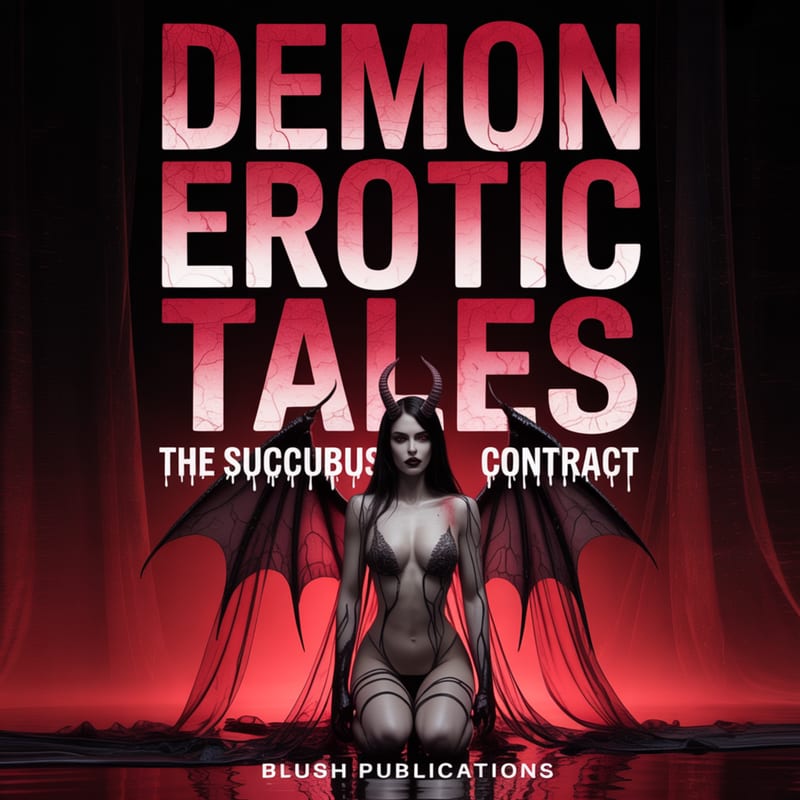
Demon Erotic Tales
Dark bargains, hellfire passion, and sinful surrender in 10 explicit demon erotica short stories.
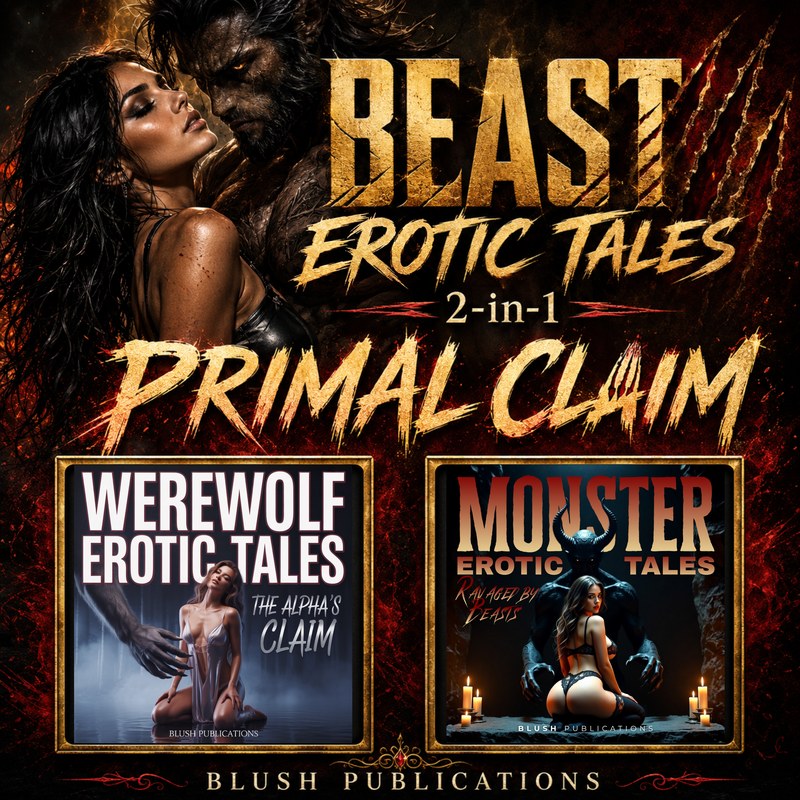
Beast Erotic Tales
Primal claim. 20 explicit stories of monstrous beasts and the humans they take as their own.
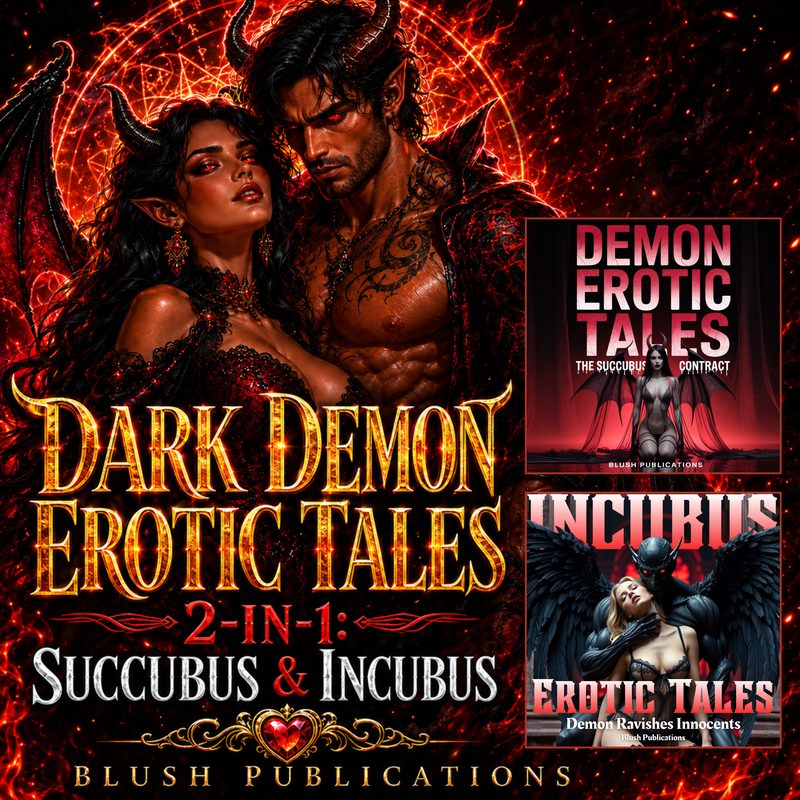
Dark Demon Erotic Tales
Twenty explicit succubus and incubus stories of BDSM, dom sub power play, virgin first time surrender, rough claiming and ritual breeding.