What Is Viking Erotica? A Historical Accuracy Audit
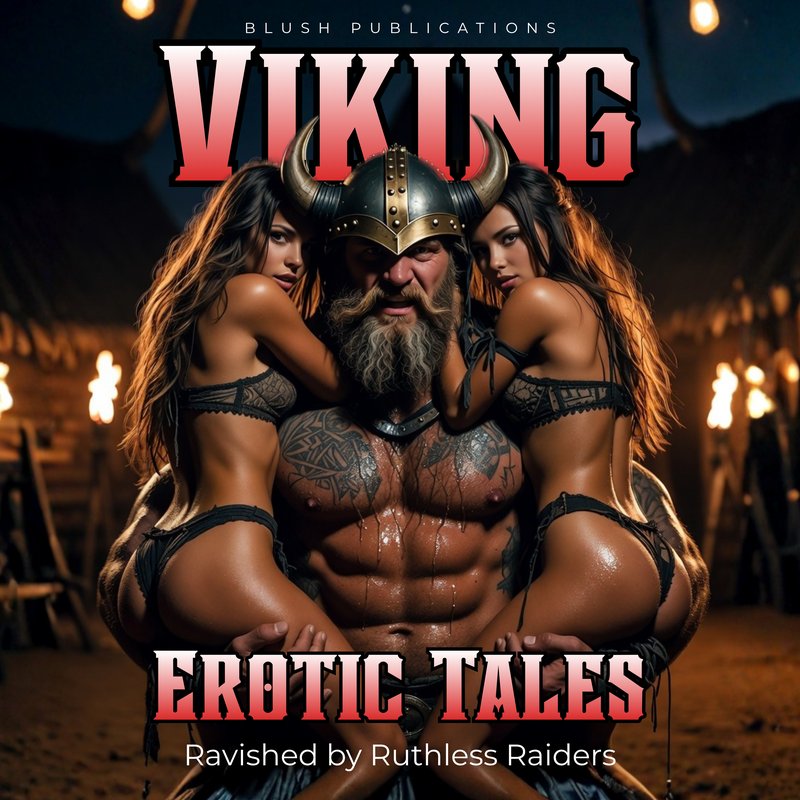
Viking erotica is historical fiction in roughly the way that a Renaissance fair is the fifteenth century. The costume is enthusiastic, the vocabulary is borrowed, and the underlying facts are mostly decoration.
This is not a complaint. Genre fiction is allowed its inventions, and readers arriving at a Norse romance are not there for a seminar. But knowing which parts are invented makes the subgenre more interesting to read, not less — because the inventions are all doing the same job, and once you see the job you can see the whole machine.
So: claim by claim.
Claim: the helmets had horns
The genre: occasionally, mercifully less often than it used to.
The record: no. Not one horned helmet has ever been recovered from a Norse burial or settlement. The image comes from a nineteenth-century costume designer working on Wagner, and it stuck because it is a superb piece of visual shorthand.
Why it survives: it signals “not Roman, not medieval, something older and wilder” in a single silhouette. Cover designers still reach for it even when the text does not.
Claim: raiders arrived, took what they wanted, and left
The genre: near-universally. The raid is the inciting incident of about half of all Viking romance.
The record: raiding happened, and the surviving accounts are grim. But the Norse were also traders, farmers, settlers, mercenaries and administrators across an enormous geographic range, and most Scandinavians in the period never raided anything. The raid is one activity of a minority, standing in for an entire culture.
Why it survives: because it is a plot. Trade routes and land tenure are harder to structure a story around than a longship on the horizon.
Claim: captive-taking was routine and could turn into romance
The genre: constantly. The abduction-to-affection arc is the subgenre’s spine.
The record: enslavement was real, widespread, and central to the Norse economy. The people taken were property under law — the term is thrall — and the reality bore no resemblance to what the genre does with it. This is the largest gap between the fiction and the history, and it is worth naming plainly rather than glossing.
Why it survives: the genre is not actually writing about slavery. It is writing about a captivity fantasy in period costume, and the historical setting exists to make the fantasy legible as fiction rather than as a contemporary crime. Readers understand this contract. It is the same mechanism that lets dark romance do what it does.
Claim: shieldmaidens fought alongside men
The genre: frequently, and increasingly — the warrior heroine has largely replaced the captive heroine in newer work.
The record: genuinely contested, which makes it the most interesting entry here. The sagas describe armed women. Some high-status burials with weapons have been osteologically identified as female. Whether that means women fought routinely, occasionally, ceremonially, or whether grave goods indicate something other than the occupant’s profession, is an argument historians are still having.
Why it survives: it is the rare case where the genre’s preference and the evidence are pointed the same way. A heroine who can fight solves the consent problems the captive plot creates, so writers had every reason to adopt shieldmaidens the moment the scholarship gave them cover.
Claim: Norse women had no standing
The genre: usually implied, occasionally stated.
The record: the opposite, comparatively. Norse women could own property, initiate divorce, run a household and its finances in a husband’s long absence, and inherit. By the standards of contemporaneous Christian Europe, the legal position was notably strong.
Why it survives: because the genre needs an imbalance to resolve. A heroine with legal recourse is harder to place in jeopardy, so the fiction quietly downgrades her rights and then rewards her with agency as a character arc — agency the historical woman would have started with.
Claim: marriage was a matter of seizure
The genre: often. The claiming scene does a lot of work.
The record: Norse marriage was a negotiated arrangement between families, with a contract, a bride-price, a dowry, and terms for dissolution. It was closer to a merger than to a capture.
Why it survives: contracts are not romantic. The claiming scene supplies in thirty seconds what a negotiation would take three chapters to deliver, and it produces the possessive register the alpha hero requires.
Claim: everyone was enormous, blond and filthy
The genre: the first two, yes; the third, rarely.
The record: average heights were unremarkable and slightly below modern norms. Hair colour varied widely across a population spanning from Ireland to the Volga. And the Norse were, by the standards of the period, conspicuously clean — combs are among the most common personal artefacts recovered, and English chroniclers complained about Danish grooming habits making them too appealing to local women.
Why it survives: the first two because the genre wants a physically overwhelming hero; the third does not survive, because nobody wants to read it.
What all the inventions have in common
Line them up and the pattern is unmistakable. Every distortion runs in the same direction: it removes the heroine’s institutional power and increases the hero’s physical power.
Her legal rights go. His size grows. Her family’s negotiating position vanishes. His capacity to simply take what he wants is elevated to a cultural norm. The genre is not being careless with history — it is being extremely purposeful, stripping out every element that would let the heroine resolve the situation through any means other than the relationship itself.
That is the machine. The Norse setting is chosen because it is remote enough to permit it and familiar enough to require no explanation.
What the genre gets right
Three things, consistently.
The sea as a presence. Good Viking romance understands that everything in this world arrives and departs by water, and that a longship on the horizon is either salvation or catastrophe with no way to know which.
Oath culture. The sagas are obsessive about sworn word, and the genre inherits it. When a Norse hero gives his word in these books, the weight it carries is authentically drawn.
Winter. The long dark, the enforced closeness, the sense of a household sealed in together for months. That is real, and it is the single best thing the setting gives a romance writer — forced proximity with a meteorological alibi.
Where to listen
Viking Erotic Tales collects the setting in short form, narrated by Zabrina Marie. Short form suits it: each story can establish its own raid, hall or winter and resolve it, without needing to sustain a saga’s worth of invented politics.
The viking category has the rest of the shelf, and the neighbouring alpha and forbidden collections cover the same dominance dynamics in settings that make no historical claims at all. If the appeal turns out to be the rough-hewn hero rather than the period, Cowboy Erotic Tales does a similar job in a different century.
Frequently Asked Questions
Is Viking erotica historically accurate?
Very little of it. The costume and vocabulary are borrowed; the social structure is largely invented, and the inventions consistently reduce the heroine’s real historical rights in order to create the imbalance the plot needs.
Were shieldmaidens real?
Genuinely unresolved. The written sagas describe armed women and some weapon burials have been identified as female, but historians disagree about what that indicates. It is the one major genre claim with live scholarly support behind it.
Is this the same as Norse fantasy or romantasy?
No. Viking erotica keeps to a broadly human, broadly historical setting. Once gods, magic or shapeshifting enter, you are in romantasy territory, which follows different conventions.
Are the characters adults?
Yes — every character across the catalog is an adult, and the relationships depicted are between adults regardless of the period setting.
Where does it sit on heat level?
High and early. The setting supports directness, so these stories rarely spend long on ambiguity.
Books Mentioned
Viking Erotic Tales
Ravished by ruthless raiders. 10 explicit stories of captive breeding, forced submission, and berserker lust.
Alpha Erotic Tales
Triple heat. 30 explicit stories of dominant alpha males who take command and never ask twice.
Cowboy Erotic Tales
Rugged ranch hands, rodeo encounters, and primal possession in 10 explicit cowboy erotica short stories.