What Is Werewolf Erotica? A Glossary First
Werewolf erotica has a gatekeeping problem, and the gate is made of words. Blurbs and reviews in this subgenre are written in a private dialect — knotting, rut, mate bond, omega, claiming — that regular readers absorbed years ago and that everyone else has to reverse-engineer from context, usually while already three chapters into a book they may not have wanted.
So: definitions first. The plots are downstream of the vocabulary, and they make far more sense once you know what the terms actually mean. Every participant in this material is an adult, and the language below is described here the way a reference book would describe it.
The vocabulary
Knotting
Borrowed wholesale from canid biology. In dogs and wolves the bulbus glandis is a swelling at the base of the penis that enlarges during mating and physically locks the pair together for a period afterwards. Werewolf fiction imports the anatomy directly and treats it as the defining physical marker of a shifter partner.
Structurally, it does two things: it makes the encounter unmistakably non-human, and it enforces a period of enforced closeness afterwards during which the characters have to talk. Writers use that enforced aftermath more deliberately than newcomers expect. It is where the emotional beat usually lands.
Mate bond
A supernatural pairing recognised rather than chosen — the shifter identifies a specific person as their mate on first scent or first sight, and the recognition is permanent. Sometimes framed as instinct, sometimes as magic, occasionally as a literal metaphysical tether that transmits emotion or pain between the pair.
The bond exists to solve a pacing problem. It supplies certainty on page one that a conventional romance would need three hundred pages to earn, which is why it dominates short-form work. It also creates its own conflict: if the bond decided, did the character? Fated mates is the broader term for the same mechanic across paranormal fiction.
Rut
A recurring period during which a male shifter’s drive intensifies dramatically and his self-control drops. Taken from the seasonal breeding behaviour of real mammals, usually stripped of the seasonality and reduced to a cyclical event of a few days.
Heat
The counterpart, applied to a female or omega character: a cyclical period of heightened receptivity and drive. Both rut and heat are, in craft terms, clocks. They compress the timeline, remove the option of waiting, and manufacture urgency without requiring an external villain. Competently written examples establish consent before the cycle begins precisely because the cycle removes the chance to negotiate during it.
Pack hierarchy
The social structure the characters live inside — who leads, who defers, who is permitted to mate with whom, and what happens when someone breaks rank. Pack hierarchy is the genre’s substitute for society. It provides rules to break, which is what a forbidden-relationship plot requires.
Alpha, beta, omega
Rank labels. Alpha leads and typically embodies the possessive, protective archetype; beta occupies the middle; omega is the lowest formal rank, frequently reframed as rare and desirable rather than merely subordinate.
Worth knowing: the alpha wolf model came from mid-twentieth-century studies of captive wolves, was popularised in a 1970 book, and was subsequently disavowed by the researcher most associated with it — wild wolf packs are family groups led by breeding parents, not dominance ladders. The science was corrected; the fiction kept the ladder, because a ladder is more useful to a story than a family. If it is the archetype rather than the fur that appeals, possessive alpha romance covers the same personality without the shifting.
Omegaverse (A/B/O)
A distinct system, not a synonym for werewolf fiction. Omegaverse applies the alpha/beta/omega rank structure to a whole society — often to humans with no wolves in sight — and adds a standard set of biological rules: scent-based compatibility, heats and ruts, bonding bites. Plenty of werewolf erotica uses none of it. Plenty of omegaverse has no werewolves. The two overlap heavily and are not the same shelf.
Claiming and marking
The act by which a bond is made formal and public. Usually a bite that leaves a permanent scar, sometimes accompanied by scent transfer, occasionally by a magical sign. The mark is legible to other shifters, which is the point — it is a declaration made to the pack, not to the partner.
Scenting
Recognition and communication by smell. Shifters can identify individuals, emotional states, arousal, illness and other pack affiliations by scent. It functions as the genre’s lie detector: nobody in a werewolf story can conceal how they feel, which strips out an entire category of romantic misunderstanding.
Rogue, or lone wolf
A shifter without a pack, by exile or by choice. Rogues supply outsider tension, and a rogue paired with a ranking pack member is the standard shape for a class-transgression plot.
Breeding
An explicit interest in conception as part of the fantasy, common in this subgenre because the mate bond and the heat cycle both point at it. It is a distinct kink with its own conventions rather than a byproduct of the werewolf setting, and we cover it separately in what breeding kink means.
Where these words came from
Very little of this vocabulary was invented by publishers. Knotting arrived from zoology by way of fandom. Omegaverse emerged in online fan communities around 2010 and migrated into original fiction so completely that most readers who use the terms now have no idea where they started. Fated mates came in from paranormal romance and predates all of it.
That origin explains why the dialect is so consistent across authors who have never met. It was standardised by readers in comment threads, not by an editorial style guide, and it hardened before the commercial market arrived to formalise anything.
How the terms assemble into plots
Once you can read the words, the story shapes become obvious. Almost everything in this subgenre is one of six.
Recognition. Two characters meet, the bond fires, and the rest of the story is the negotiation of a fact that has already been decided. The tension is not whether but how, and how much either of them resents it.
Rejection. A mate is recognised and refused — by rank, by circumstance, by pride. The rejected-mate story is one of the most popular shapes in the entire subgenre because it takes the bond’s certainty and converts it into an open wound.
The cycle. A rut or heat arrives and compresses everything into a few days. This is the pressure-cooker plot: a hard clock, a confined space, and a decision that cannot be deferred.
Claiming an outsider. A human, a rogue, or a member of a rival pack is brought inside and marked. Combines the mate bond with pack politics and produces the largest amount of external conflict, which is why longer books favour it.
Pack politics. Succession, challenge, alliance by mating, the alpha who has to choose between the pack and the person. The relationship becomes a political act.
The two natures. The internal version: a character fighting for control of the animal side, and a partner who is either the reason for the control or the reason it fails. This is the most character-driven shape and the one that reads closest to erotic horror.
Most short stories run one shape cleanly. Novels stack two or three.
Where to listen
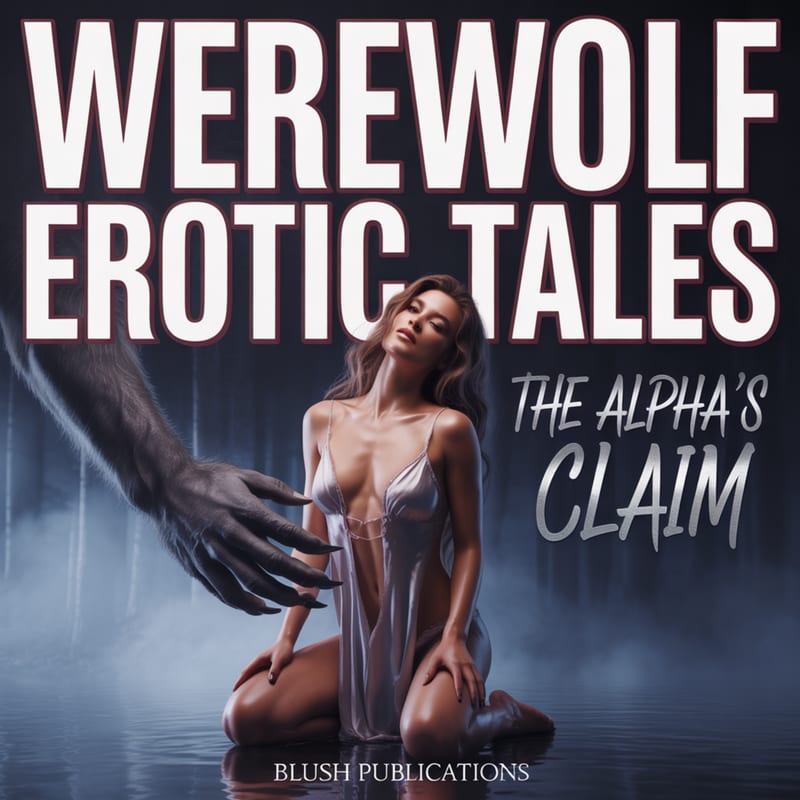
Werewolf Erotic Tales is the direct application of everything above — ten explicit standalone stories using the full vocabulary, narrated by Dawn Mount, whose lower register suits the material. Short-form is a good way to meet the jargon, because each story restates the rules quickly instead of assuming three books of background.
The wider werewolf catalogue has the rest, our ranked werewolf roundup compares what is worth starting with, and if you want the umbrella view of how wolves sit alongside dragons, cats and bears, shifter erotica maps the whole family.
Frequently Asked Questions
Do I need to know all of this before reading?
No, but knowing four terms — mate bond, rut, heat, claiming — will make ninety per cent of blurbs in this subgenre legible. The rest you can pick up as you go.
Is werewolf erotica the same as omegaverse?
No. Omegaverse is a specific rule system about ranks, scents and cycles that can be applied to any species, including ordinary humans. Werewolf erotica is about wolf shifters and may or may not use those rules. The overlap is large enough that the terms get swapped carelessly.
Is knotting in every werewolf story?
Not at all. It is common enough to be a genre signature, but a substantial amount of werewolf erotica keeps the shifter in human form throughout and skips non-human anatomy entirely. Blurbs usually signal which you are getting.
Why are the wolves always alphas?
Because the hierarchy is dramatically useful, not because it is accurate. The dominance model of wolf behaviour was overturned decades ago, but fiction kept it since rank produces obstacles, and obstacles produce plot. Titles that lead with the word alpha are selling the archetype rather than the biology.
Books Mentioned
Werewolf Erotic Tales
Alpha wolves, full-moon heat, and primal mating in 10 explicit werewolf erotica short stories.
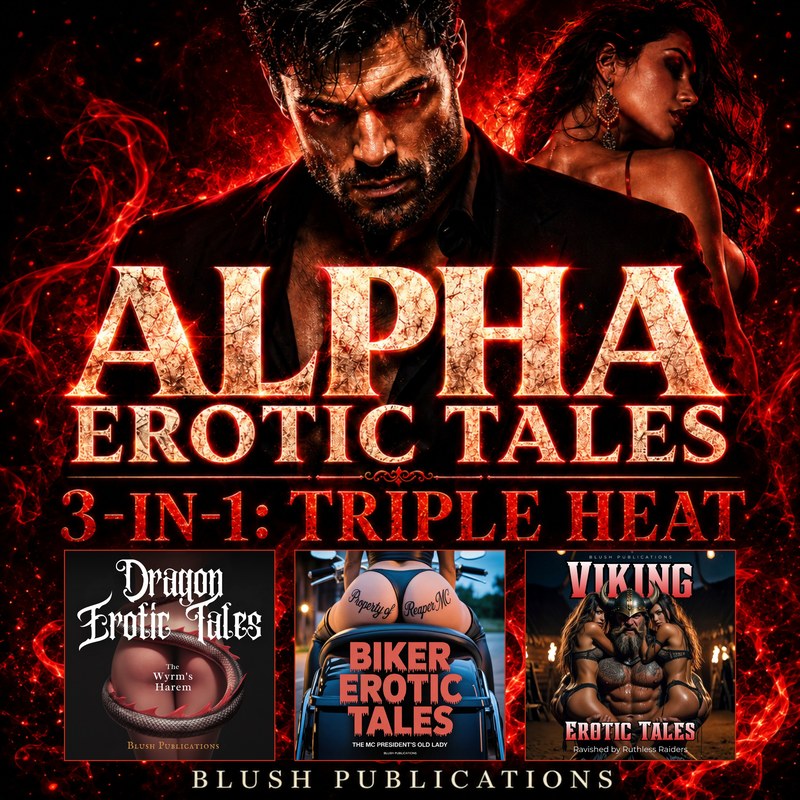
Alpha Erotic Tales
Triple heat. 30 explicit stories of dominant alpha males who take command and never ask twice.
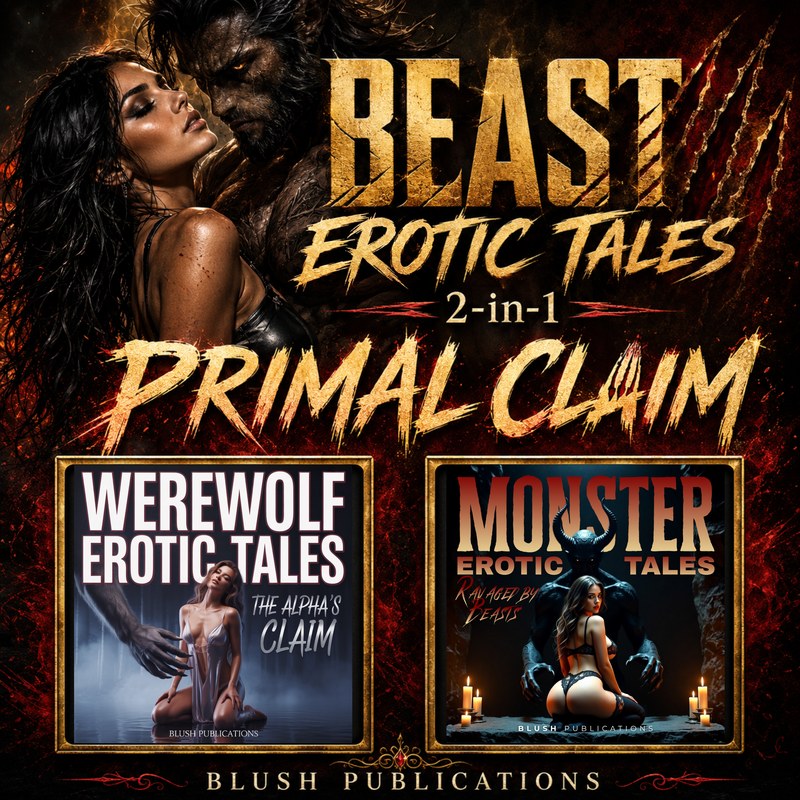
Beast Erotic Tales
Primal claim. 20 explicit stories of monstrous beasts and the humans they take as their own.