What Counts as Taboo Erotica? The Four Rings
“Taboo” is doing two jobs at once, and confusing them is why this subgenre is so badly explained.
As a marketing word it means transgressive-feeling material between adults — the step-relation, the authority figure, the forbidden circumstance. Social transgression, not legal.
As a description of where the publishing boundary sits, it is nearly useless, because the actual boundary is not one line. It is four, and they are enforced by different parties for different reasons. Here they are, from the inside out.
Ring one: sells openly on every retailer
The largest ring by far, and it contains nearly all of what gets sold as taboo erotica.
Step-relations between adults — stepbrother, stepdad, stepmom, stepsister. Authority imbalance: boss, professor, doctor. Proximity taboos: best friend’s dad, neighbour, brother-in-law. Infidelity in all its configurations. Age gaps in both directions. Cuckold and hotwife material.
Why the line sits here: every item on that list involves consenting adults with no biological relation, and the transgression is social — a rule about how people ought to behave, not a law. Publishing has no interest in enforcing social rules, so these sell freely, get reviewed openly, and appear in recommendations.
The step-relation category is the clearest illustration. It is enormous, entirely mainstream within the genre, and works precisely because the relationship is legal and unrelated by blood while feeling as though it should not be allowed. That gap is the product.
Ring two: sells, but gets filtered out of discovery
Present on retailers, purchasable, and largely invisible.
This is where most explicit erotica of any kind ends up, taboo or not. Titles in this ring do not appear in general browse, do not surface in recommendation engines, are excluded from bestseller lists shown to signed-out users, and are frequently omitted from search results unless the query is close to exact.
Why the line sits here: retailers serve a general audience and adult material is filtered by default in most contexts. The filtering is not a judgement on any individual title — it is a blanket setting that catches the whole category.
What it means for you as a reader: the ring exists, so the books are there, but you will not stumble across them. You have to search deliberately, usually with a fairly specific phrase, and often with an account-level content setting changed. This is the single most common reason people conclude a platform “does not have” erotica when it plainly does. How to find erotica on Audible covers the mechanics, and why titles get blocked covers what to do when something will not appear at all.
What it means for publishers: discoverability inside this ring runs almost entirely on direct search and external links, which is why erotica publishers depend disproportionately on their own sites and on word of mouth.
Ring three: retailers decline it
Legal to write, legal to own, and refused by the major storefronts.
Content standards at the large retailers exclude several categories that are not illegal — material involving non-human animals, material depicting non-consent presented approvingly rather than as conflict, incest between blood relatives, and certain kinds of extreme content. The specifics vary by retailer and change over time, and each publishes its own standards.
Why the line sits here: these are commercial decisions by private companies about what they are willing to be associated with. There is no legal compulsion involved and different retailers draw the line in slightly different places, which is why a title can be available on one platform and refused by another.
A frequent point of confusion: step-relations sit in ring one and blood relations sit in ring three, which strikes some readers as an arbitrary distinction. It is not arbitrary — it is the entire line. The step-relation trope exists in the shape it does because of this boundary, and writers are meticulous about establishing non-biological relation early for exactly that reason.
Ring four: cannot be published
Material depicting minors in sexual contexts. This is illegal, it is not a matter of retailer policy, and it is not a boundary that moves.
Every character in every book across the mainstream erotica market is an adult, and reputable publishers state ages explicitly in the text for exactly this reason. Where a trope’s name might suggest otherwise — “daddy”, “babysitter”, “first time”, “virgin” — the name refers to a dynamic or a role, and the characters are adults. Anyone encountering material that suggests otherwise should report it rather than seek it.
That is the whole of ring four and there is nothing further to say about it.
The rings, summarised
| Ring | Status | Enforced by | Example |
|---|---|---|---|
| 1 | Sells openly | Nobody | Step-relations, authority figures, infidelity |
| 2 | Sells, filtered from discovery | Retailer default settings | Most explicit erotica of any kind |
| 3 | Declined | Retailer content standards | Blood incest, bestiality, approving non-consent |
| 4 | Illegal | Law | Minors |
What “taboo” actually means when you search it
Given the above: when a retailer or an author uses “taboo” as a label, it means ring one. Every time. Nothing in rings three or four is on sale anywhere, and ring two is not a genre.
So the word is not a warning and it is not a boundary marker. It is a flavour descriptor, indicating that the story’s tension comes from a relationship people would disapprove of rather than from an external obstacle. That is genuinely useful information — it tells you the conflict is social and internal rather than plot-driven — but it tells you nothing about how far the content goes.
For that, the heat labels are the relevant scale, and they are a separate axis entirely. A taboo book can be mild. A non-taboo book can be extremely explicit.
Where to listen
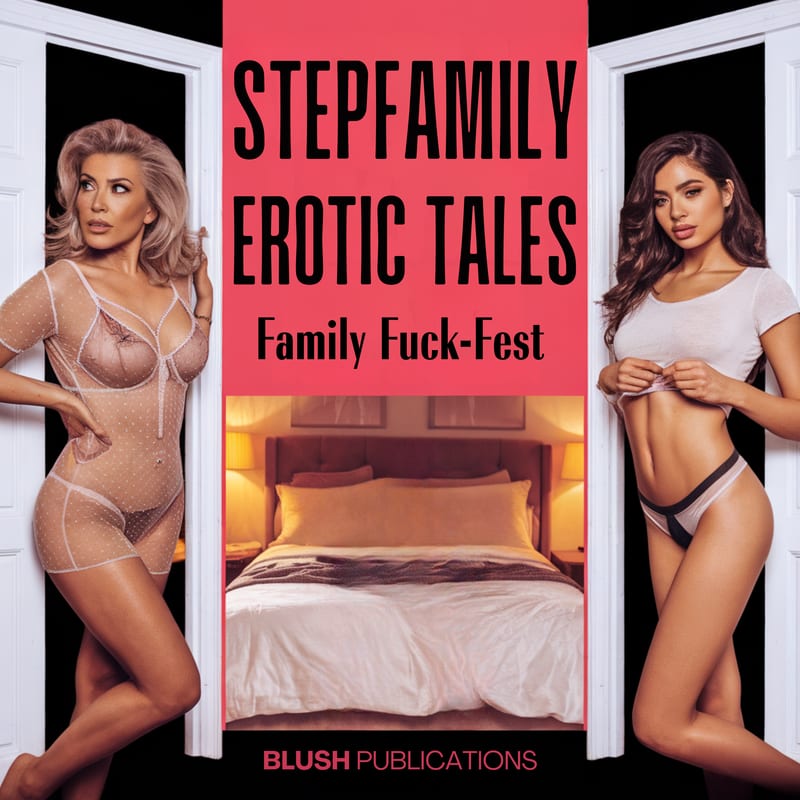
Stepfamily Erotic Tales, narrated by Dawn Mount, is the catalog’s broadest entry into ring one — ten stories across the step-relation configurations. Forbidden Family Erotic Tales covers the same territory with the emphasis on circumstance, and Stepbrother Erotic Tales, narrated by Rachel Sanderson, is the single most-searched configuration on the shelf.
The taboo and forbidden shelves have the rest, and the taboo roundup ranks the catalog. Every character in every one of them is an adult.
Frequently Asked Questions
What does taboo mean in erotica?
Material whose tension comes from social disapproval rather than from a plot obstacle — step-relations, authority figures, infidelity, forbidden circumstance. It always refers to transgression between consenting adults.
Why are step-relations allowed but blood relations are not?
Because retailer content standards draw the line at biological relation. The step-relation trope is built around that boundary, which is why writers establish the non-biological relationship explicitly and early.
Are the characters in taboo erotica always adults?
Yes, without exception in anything legitimately published. Trope names referring to roles or dynamics do not describe the characters’ ages, and reputable publishers state ages in the text.
Why can I not find taboo titles when I search?
Because most explicit material sits in the filtered ring — present on the platform but excluded from browse, recommendations and general search. You usually need a near-exact search term and an adjusted account content setting.
Does taboo mean the book will be very explicit?
No. Taboo describes where the tension comes from; heat level is a separate axis. A taboo book can be mild and a non-taboo book can be extremely graphic.
Books Mentioned
Stepfamily Erotic Tales
The whole forbidden household — multi-partner dynamics and escalating taboo encounters in 10 explicit stepfamily erotica stories.
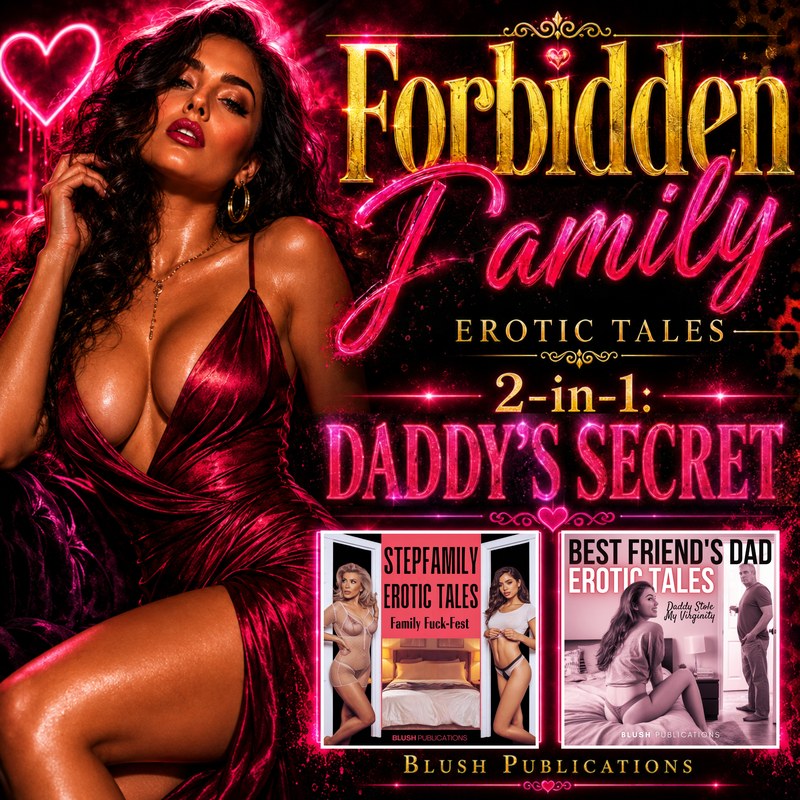
Forbidden Family Erotic Tales
Daddy's secret and the family lines no one admits to crossing. 20 explicit forbidden family stories.
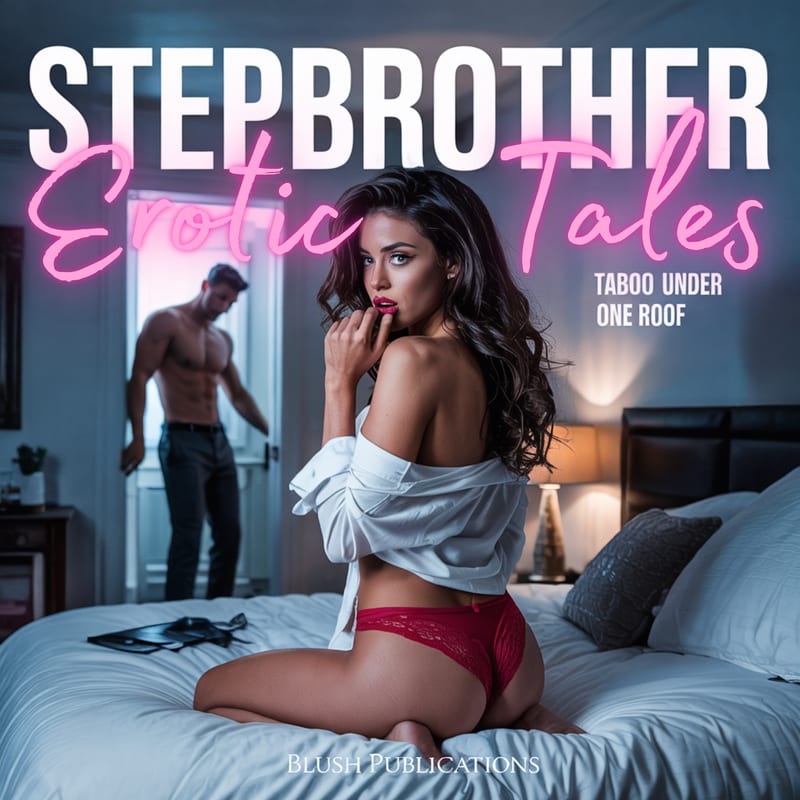
Stepbrother Erotic Tales
Forbidden desire, thin walls, and secret encounters in 10 explicit stepbrother erotica short stories.